Selling explosion-proof flashlights and headlamps under your own brand is common among safety distributors, industrial suppliers and contractors. Done well it gives you a protected product line and better margins. Done badly it leaves you with lights you cannot legally sell. The difference is almost always made in the first two weeks, when certification, battery shipping and branding are planned.
Step 1: understand who owns the certificate
An Ex certificate is issued to a manufacturer for a specific design: housing, circuit, battery, lens and materials. When you private-label, the certificate usually stays with the factory. That has three consequences:
- The rating label must still show the certificate number, the Ex marking and the certificate holder's details as the certificate requires. Your brand can go on the housing and packaging; the safety label cannot be simplified.
- Cosmetic changes (logo, colour, packaging) do not change the certified design.
- Technical changes (battery capacity, LED, driver, housing material, lens) usually need the certificate to be updated and the product re-tested.
If you want your company named as the manufacturer on the certificate, that is a separate certification project with the certifying body. Plan for it as such.
Step 2: decide which certification scheme you need
| Scheme | Where it is required or accepted | Notes |
|---|---|---|
| Chinese explosion-proof certificate (CNEx) and CCC | China; accepted on some projects elsewhere | The certificates the factory holds today. |
| IECEx | Australia, and accepted or used as the basis for national approval in many countries in the Middle East and Asia | One test report can support several national approvals. |
| ATEX | European Union and EEA (mandatory) | CE marking, notified body certificate for category 1 and 2 equipment. |
| UL / CSA (Class/Division) | United States and Canada | Separate test standards and factory inspections. |
Ask your end customers which scheme their sites accept before you choose models. If it is not the scheme on file, budget time and cost for certification before the first shipment.
Step 3: choose what to change
| Change | Affects certificate? | Effect on cost and lead time |
|---|---|---|
| Laser-engraved logo on aluminium housing | No | Small; adds a process step |
| Pad or screen-printed logo on plastic housing | No | Small; needs a print plate |
| Housing colour | Usually no, but confirm the coating | Moderate; colour batches have minimums |
| Gift box, carton marks, manual | No (manual must keep safety instructions) | Printing minimums apply |
| Battery capacity or type | Yes | Re-testing time and cost |
| LED, optics or driver | Yes | Engineering plus re-testing |
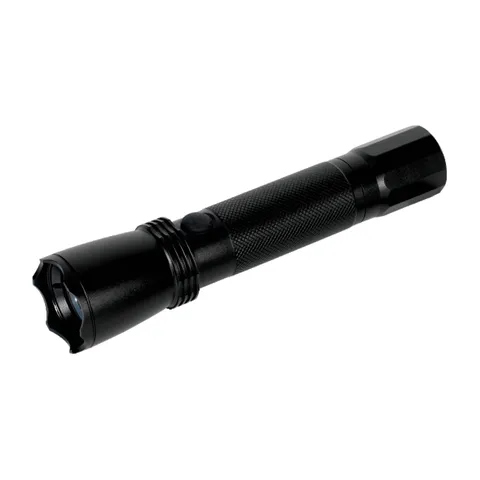
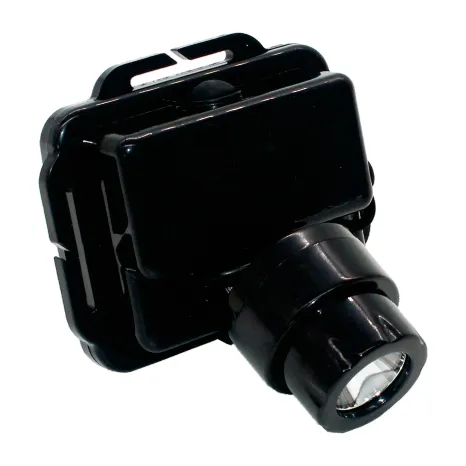
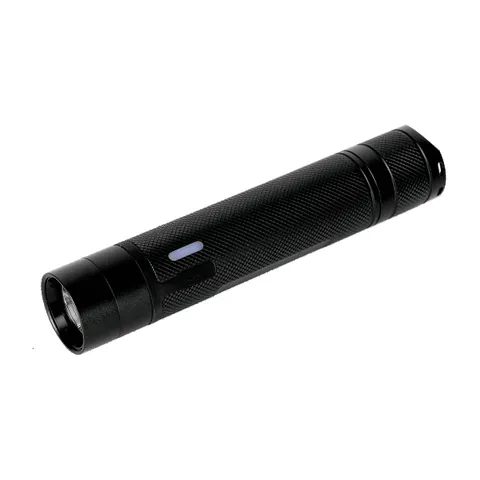
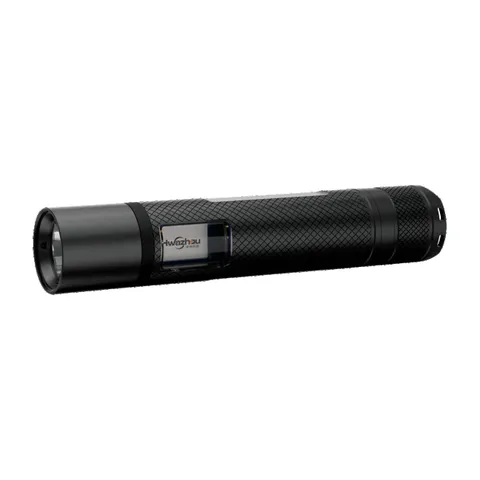
The fastest projects start from standard models with high volume, such as the HZ7623 flashlight, HZ5130 headlamp and HZ7302 pocket light, and change only what the end user sees.
Step 4: understand the cost drivers
- Model and protection type. Flameproof lights use more metal and machining than intrinsically safe ones.
- Quantity per model. Spreading an order across many models raises unit cost; start with two or three.
- Branding method. Laser engraving costs less to set up than custom colours.
- Packaging. Printed gift boxes have their own minimums.
- Certification work. Any re-testing or new scheme is usually the largest single item.
- Shipping. Lithium battery products ship as dangerous goods, which costs more than general cargo.
Step 5: plan quality control
- Golden sample. Approve and keep a signed branded sample. Every later inspection compares against it.
- In-process checks. Ask for photos of engraving and printing on the first units off the line.
- Aging and battery tests. The factory runs finished lights in its aging centre and cycles batteries; ask for the records for your batch.
- Pre-shipment inspection. Agree a sampling plan, commonly ISO 2859-1 (AQL) at general inspection level II, and what counts as a critical, major and minor defect. Check the rating label on every sample.
- Documents. Certificate copy, test reports, UN38.3 summary and MSDS should ship with the order.
Step 6: ship lithium batteries correctly
Lights with built-in lithium batteries are classed as dangerous goods: UN3481, lithium-ion batteries contained in equipment (or packed with equipment if the battery is separate). Before production, confirm with your forwarder:
- The cells and packs have a UN38.3 test summary.
- An up-to-date MSDS (SDS) is available.
- Packaging and labels meet the rules for your mode: IATA for air, the IMDG Code for sea.
- Whether air freight is practical for your quantities, or sea freight is better.
A typical project timeline
- Brief: models, quantities, market, scheme, branding.
- Quote and artwork: pricing, lead time, logo and packaging mock-ups.
- Branded sample: made, shipped, tested and signed off.
- Deposit and production: including aging and battery tests.
- Inspection and shipping: pre-shipment check, documents, booking as dangerous goods.
Certification for a new scheme runs in parallel and usually sets the overall timeline. See our OEM process or send a brief.
A sample brief you can copy
A short, complete brief gets an accurate quote in one round instead of five. Something like this is enough:
- Company and market: safety equipment distributor, Gulf countries, oil and gas customers
- Certification: end customers accept IECEx; Chinese certificate acceptable for first trial order
- Models and quantities: HZ7623 × 1,000, HZ5130 × 1,000, HZ7106A × 200 per year
- Branding: laser-engraved logo on flashlights, pad print on headlamps, own gift box, English and Arabic manual
- Changes: none to battery, LED or housing
- Samples: 2 branded samples of each model to Dubai
- Shipping: sea freight to Jebel Ali, forwarder handles dangerous goods
With that, a factory can quote unit prices, MOQ, sample cost, lead time and certification options in one reply.
Checklist for your first order
- Certification scheme confirmed with end customers
- Two or three high-volume models chosen
- Only cosmetic changes on the first order
- Signed golden sample
- AQL sampling plan and defect list agreed
- UN38.3, MSDS and certificate copies in hand
- Forwarder confirmed for dangerous goods
Frequently asked questions
Can my brand appear on the Ex rating label?
Your brand can appear on the housing and packaging. The rating label must still show what the certificate requires, normally including the certificate holder and certificate number. Having your company named on the certificate is a separate certification project.
Does changing the colour affect the Ex certificate?
Usually not, but some coatings affect surface resistance and static charge, so confirm the coating with the factory before ordering.
What is the fastest way to start private labelling?
Pick two or three standard, high-volume models, change only the logo and packaging, and approve a branded sample before the deposit.
How are flashlights with lithium batteries shipped?
As dangerous goods under UN3481. You need a UN38.3 test summary, an MSDS and packaging and labels that meet IATA rules for air or the IMDG Code for sea.
Do you need ATEX for the Middle East or Southeast Asia?
Not always. Many projects accept IECEx or national certificates, and some accept the Chinese certificate. Always confirm with the end customer.
Further reading
- IECEx: International Electrotechnical Commission System for Certification to Standards Relating to Equipment for Use in Explosive Atmospheres
- European Commission: Equipment for potentially explosive atmospheres (ATEX)
- IATA: Lithium batteries
Need lights for a project? Send the zone, gas group and quantities and we will suggest models and a price.
Get a quote