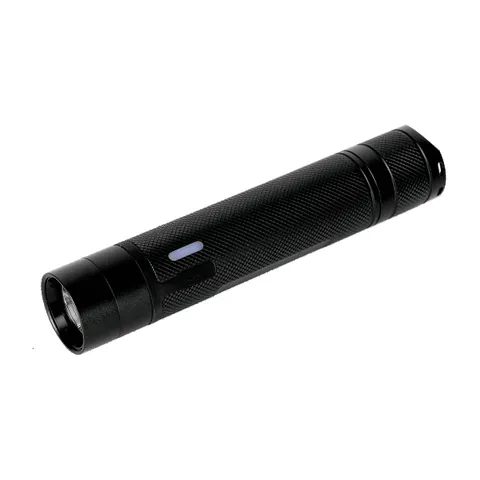
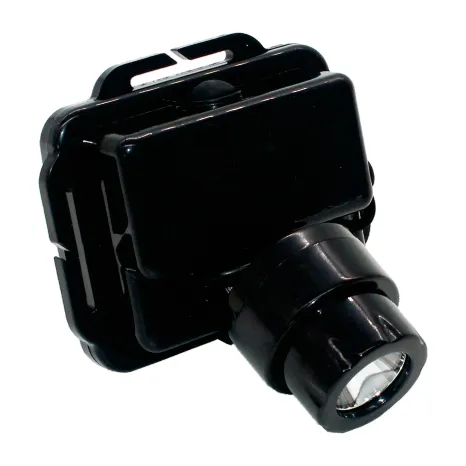
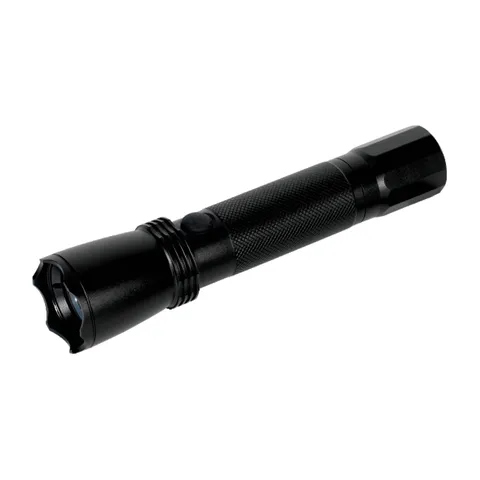
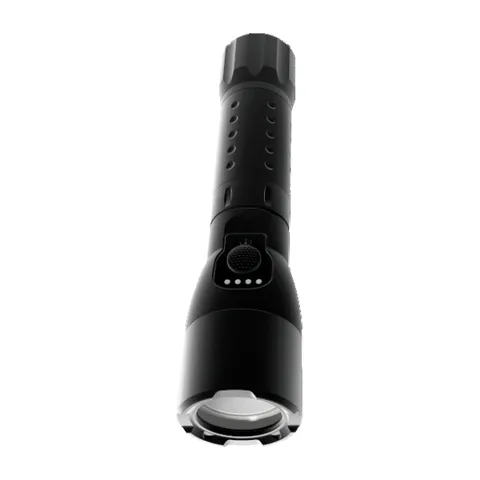
An explosion-proof flashlight is the one piece of Ex equipment almost every worker on a hazardous site carries. That makes it the item bought in the largest quantities and the one most often bought on price alone. This guide sets out what to check so the lights you buy are safe, bright enough and still working at the end of a double shift.
1. The Ex marking matches your site
Start with safety, not brightness. Compare the light's marking with the hazardous area drawing:
- EPL: Gb for Zone 1 work (Ga only if crews enter Zone 0).
- Gas group: IIC covers every gas group.
- Temperature class: T4 covers most hydrocarbons; choose T6 for carbon disulphide and other low-ignition gases.
If you need a refresher, read how to read an Ex marking. Lights without an Ex marking, however rugged, must stay out of classified areas.
2. Protection type fits the job
| Use | Best fit | Example |
|---|---|---|
| All-day pocket carry, inspection rounds | Intrinsically safe (Ex ib), light | HZ7302, 86 g |
| Hands-free work, confined spaces | Ex ib headlamp | HZ5130, 93 g |
| General maintenance | Ex ib, 2,000–2,600 mAh | HZ7623 |
| Low-ignition gases (T6) | Flameproof + intrinsically safe | HZ7625, Ex d ib IIC T6 Gb |
| Water, diving, ship work | Flameproof, deep IP68 | HZ7211, IP68 to 50 m |
| Search and rescue, long throw | Flameproof + IS hand searchlight | HZ7106A |
See intrinsically safe vs flameproof for how the two methods differ.
3. Light output: watts, lumens and beam
Explosion-proof flashlights are deliberately less powerful than consumer torches: intrinsic safety limits the energy, so most pocket models use 3W to 5W LEDs. Do not compare them with 2,000-lumen outdoor lights; compare them with each other.
The fair way to compare is the ANSI/PLATO FL1 standard, which defines four numbers:
- Light output (lumens): total light.
- Peak beam intensity (candela): brightness at the centre of the beam.
- Beam distance (metres): how far the beam reaches 0.25 lux, derived from candela.
- Runtime: time until output falls to 10% of the starting value.
For inspection work, a focused beam that reaches the top of a column or the far side of a pipe rack matters more than total lumens. Zoom models such as the HZ202C and HZ7633 let one light do both close work and distance spotting. Ask suppliers for FL1 figures; if they only quote watts, ask for lumens and candela measured on the actual model.
4. Runtime covers the shift
Runtime is usually quoted per mode. A useful light has a high mode for spotting and a work mode that lasts the whole shift. Check the work-mode figure, not just the high mode.
| Model | Battery | High | Work |
|---|---|---|---|
| HZ7302 | 1900 mAh | ≥4 h | ≥8 h |
| HZ7623 | 2200 mAh | ≥8 h | ≥16 h |
| HZ7210 | 4400 mAh | ≥8 h | ≥16 h |
| HZ7633 | 2.6 or 5 Ah | ≥10 h | ≥20 h |
| HZ5135 headlamp | 2600 mAh | ≥4 h spot | ≥16 h spot (low) |
For 12-hour shifts, choose a work mode rated at 12 hours or more, so the light still works on overtime.
5. Battery and charging
- Charging method. USB-C (as on the HZ7623A) is convenient but means users may charge anywhere. Cradles and fleet chargers such as the HZ1110 charging case keep charging in one controlled place outside the zone.
- Battery indicator. A battery gauge or LCD (as on the HZ7307) stops people walking into a vessel with an empty light.
- Replacement. Use only the battery named on the certificate. Ask whether spares are available and whether the battery may be changed by users.
6. Ingress protection (IP rating)
| Rating | Meaning | Fits |
|---|---|---|
| IP54 | Dust protected, splash-proof | Indoor and sheltered use |
| IP66 | Dust-tight, powerful water jets | Outdoor plant, rain, wash-down |
| IP67 | Dust-tight, immersion to 1 m for 30 min | Occasional drops into water |
| IP68 | Dust-tight, immersion beyond 1 m as stated by the maker | Marine, flooding, diving (check depth and time) |
IP68 only means something with a depth and time, such as "IP68 (2 m, 1 h)" or the HZ7211's 50 m for 1 hour. Remember that IP and Ex are separate: one does not imply the other.
7. Toughness and ergonomics
- Drop resistance. Lights are dropped from scaffolds and ladders. The BAD206 is rated for a 9 m drop.
- Magnets and adjustable heads (such as on the HZ7303) free both hands during work.
- Glove-friendly switches and mode locks prevent accidental switching. The HZ5133B/C headlamp switches with a wave of the hand.
- Weight. People carry lights they do not notice. Under 200 g for pocket lights and around 100 g for headlamps is comfortable for a full shift.
8. Certification scheme and documents
Finally, check that the certificate is from a scheme your site accepts (national, IECEx, ATEX, or UL/CSA in North America), that it names the exact model, and that you can get a copy for your equipment register. For imports with lithium batteries, also ask for the UN38.3 summary and MSDS.
Five buying mistakes to avoid
- Comparing with consumer torches. Intrinsic safety limits power; an Ex torch will never match a 2,000-lumen outdoor light, and a supplier who claims it should be asked for the certificate.
- Ignoring the work mode. A high mode of 4 hours is fine if the work mode lasts 16; it is a problem if the light only has one mode.
- Buying one model for everyone. Most sites need a headlamp for every worker plus a smaller number of flashlights and searchlights.
- Forgetting charging. Without a charging point outside the zone, people charge where they can. Plan cradles or a fleet charger with the order.
- No certificate on file. Inspectors ask for it. Keep a copy for each model in the Ex equipment register.
Quick specification template
Use this when you request quotes, so suppliers answer the same questions:
- Ex marking required: e.g. Ex ib IIC T4 Gb or better
- Certification scheme: national / IECEx / ATEX / UL
- Work-mode runtime: ≥12 h
- Light output: lumens and candela to ANSI FL1
- IP rating with depth and time
- Drop height
- Charging: USB-C, cradle or fleet charger
- Weight limit
- Quantity, delivery port and branding
Send it to us through the quote form and we will match models from the range.
Frequently asked questions
How bright should an explosion-proof flashlight be?
Enough for the task, not as bright as possible. Intrinsic safety limits power, so most pocket models use 3–5W LEDs. Compare lights with each other using lumens and candela measured to ANSI FL1.
Is a rechargeable explosion-proof flashlight safe?
Yes, as long as it is certified with that battery, is charged outside the hazardous area, and uses only the battery type named on the certificate.
What is the best explosion-proof flashlight for Zone 1?
Any light with EPL Gb (or Ga), the right gas group and temperature class, and a work-mode runtime that covers your shift. For most sites, an Ex ib IIC T4 Gb light such as the HZ7623 is the standard choice.
Do I need a headlamp or a flashlight?
Headlamps for hands-free work, ladders and confined spaces; flashlights for inspection and spotting. Many teams issue both.
How long do explosion-proof flashlight batteries last?
Runtime per charge depends on the mode (8–20 hours on work mode in our range). Battery service life is measured in charge cycles; ask the supplier for the cycle rating of the model.
Further reading
- IECEx: International Electrotechnical Commission System for Certification to Standards Relating to Equipment for Use in Explosive Atmospheres
- European Commission: Equipment for potentially explosive atmospheres (ATEX)
Need lights for a project? Send the zone, gas group and quantities and we will suggest models and a price.
Get a quote