Two protection methods dominate explosion-proof portable lighting: intrinsic safety (Ex i) and the flameproof enclosure (Ex d). Many lights use both. They work in opposite ways, and that difference decides how bright a light can be, how heavy it is, where it may go and how it must be looked after.
Intrinsic safety (Ex i): prevent the spark
An intrinsically safe light limits the electrical and thermal energy in its circuit so that no spark, short circuit or hot component can ignite the surrounding gas. The housing does not need to contain anything. The standard is IEC 60079-11.
| Level | Remains safe with | EPL | Zones |
|---|---|---|---|
| ia | Two countable faults | Ga | 0, 1, 2 |
| ib | One countable fault | Gb | 1, 2 |
| ic | Normal operation | Gc | 2 |
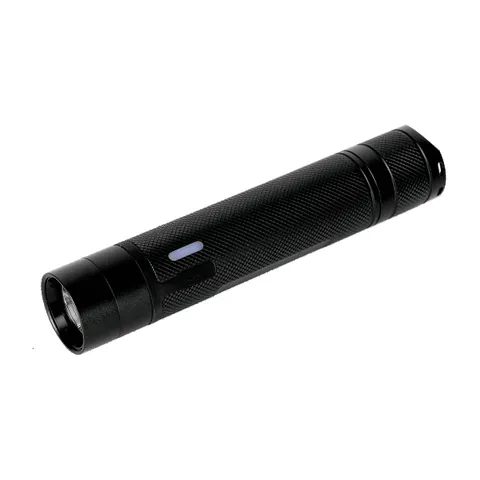
Because the energy has to stay small, intrinsic safety suits low-power lights: one lithium cell, a 3W to 5W LED and a driver with current-limiting components. Our headlamps and mini flashlights such as the HZ7302 (86 g) are Ex ib IIC T4 Gb.
Flameproof enclosure (Ex d): contain the explosion
A flameproof light assumes gas can get inside and be ignited. The housing is strong enough to contain the internal explosion, and every joint (threads, lens seats, switch shafts) has a precisely controlled gap and length so escaping hot gas is cooled below the ignition temperature of the outside atmosphere. The standard is IEC 60079-1.
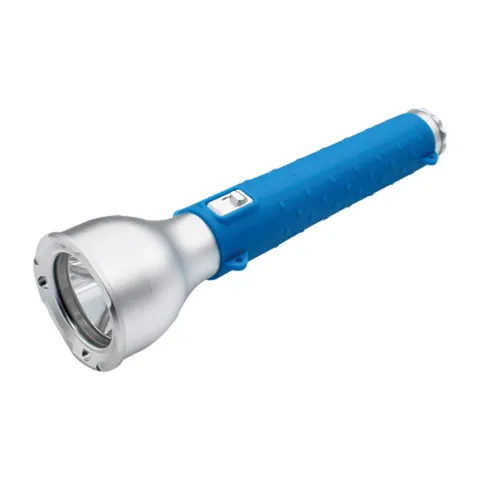
Because the housing does the work, the light inside can be more powerful. The 10W HZ7211 (Ex d IIC T6 Gb) is flameproof and sealed to IP68 at 50 m.
Combined protection
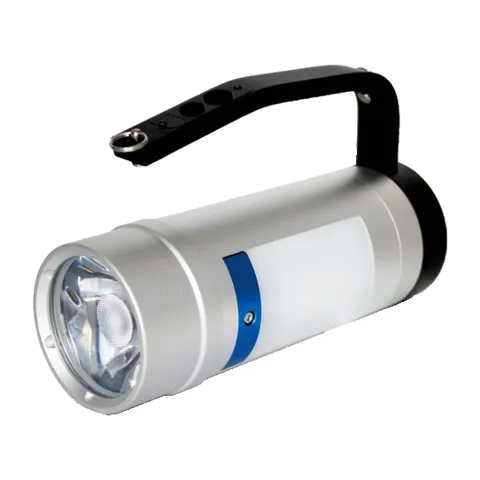
Many higher-power hand lights use both. The HZ7106A searchlight is Ex db ia: the lamp head and battery compartment are flameproof, and the control circuit is intrinsically safe. The HZ7625 is Ex d ib. Area lights add increased safety (eb) and encapsulation (mb), as on the HZ6129.
Side-by-side comparison
| Intrinsically safe (Ex i) | Flameproof (Ex d) | |
|---|---|---|
| Principle | Energy too low to ignite | Housing contains ignition |
| Typical power in portable lights | 3–5W | 10W and above |
| Weight | Light (86–300 g in our range) | Heavier (about 300 g to 1.4 kg) |
| Zone 0 | Yes, with ia | No |
| Main maintenance risk | Wrong battery or modified circuit | Damaged or dirty flame paths |
| Can the user open it in the zone? | Battery change only if the certificate allows | No |
| Typical use | Headlamps, pocket lights, all-day carry | Searchlights, high-output torches, diving-rated lights |
Other protection types you will see on lights
- Increased safety (e, eb): connections and components designed so they do not spark or overheat. Common on area-light terminals.
- Encapsulation (m, mb): electronics potted in compound. Common in LED drivers and battery packs.
- Restricted breathing (nR): a Zone 2 method for enclosures that only see brief releases, used on some corded hand lamps such as the HZ6320.
Maintenance rules that keep the protection valid
Inspection and maintenance of Ex equipment is covered by IEC 60079-17. For portable lights the practical rules are:
For intrinsically safe lights
- Use only the battery type and charger named on the certificate. A higher-capacity cell can carry more energy than the circuit was assessed for.
- Do not repair circuit boards or replace components in the field.
- Change batteries outside the hazardous area unless the certificate explicitly allows it.
For flameproof lights
- Never open the light in the hazardous area.
- Keep threads and flame paths clean and undamaged; do not paint them or use non-approved grease.
- Replace lenses and seals only with the manufacturer's parts.
For all Ex lights
- Charge outside the hazardous area.
- Take dropped or cracked lights out of service until inspected.
- Keep the certificate copy in the equipment register and check "X" conditions.
Common mistakes we see
- Buying on brightness alone. A 10W flameproof torch is heavy; crews leave it in the van and use phones instead. A 100 g Ex ib headlamp that people actually wear is safer in practice.
- Mixing batteries across models. Cells that fit physically may not be the ones on the certificate. Label chargers and spare batteries by model.
- Opening flameproof lights to "check" them on site. Every opening risks damage to the flame path. Inspect externally in the field and do internal checks in a workshop.
- Assuming IP68 means explosion-proof. Sealing keeps water out; it does not stop ignition. Always check the Ex marking.
- Ignoring the "X" conditions. Conditions such as "charge outside the hazardous area" are part of the approval. Put them in the work instruction.
Which should you choose?
- All-day carry, inspection rounds, confined spaces: intrinsically safe headlamps and pocket lights. Light enough that people actually carry them.
- Searching, long throw, emergency response: flameproof or combined searchlights.
- Zone 0 entry: ia equipment only.
- Diving, flooding, ship work: flameproof lights with deep IP68 ratings.
Most teams end up with both: an Ex ib headlamp for every worker and a few Ex db ia searchlights per crew.
Frequently asked questions
Is intrinsically safe safer than flameproof?
Neither is safer in general; both are approved for Zone 1 at EPL Gb. Intrinsic safety at level ia is the only one of the two allowed in Zone 0.
Can I change the battery of an intrinsically safe flashlight myself?
Yes, if you use the exact battery type named on the certificate and change it outside the hazardous area, unless the certificate allows otherwise.
Why are flameproof flashlights heavier?
The housing must withstand an internal explosion and have long, precise flame paths, which needs thick metal walls and threads.
What does Ex db ia mean on a searchlight?
The housing is flameproof (db) and the electronic circuit is intrinsically safe to level ia. Together they give EPL Gb in our searchlights.
Can I repair a flameproof light on site?
No. Repairs that touch the flameproof enclosure must be done by the manufacturer or a competent Ex repair workshop, following IEC 60079-19.
Further reading
Need lights for a project? Send the zone, gas group and quantities and we will suggest models and a price.
Get a quote