Every plant that handles flammable gas, vapour or dust divides its site into hazardous zones. The zone decides which equipment may be used, and portable lights are the equipment most often carried from one zone into another. This guide explains how zones are defined, how they map to the markings on a light, and how to choose a light that is safe everywhere your crews go.
How zones are defined
Zones describe how often an explosive atmosphere is present. The classification is done by the site's process safety engineers to IEC 60079-10-1 (gas) and IEC 60079-10-2 (dust), and recorded on a hazardous area classification drawing.
| Gas zone | Explosive atmosphere is present | Common rule of thumb | Typical places |
|---|---|---|---|
| Zone 0 | Continuously, for long periods or frequently | More than 1,000 hours a year | Inside tanks, vessels and vent pipes |
| Zone 1 | Likely to occur in normal operation | 10 to 1,000 hours a year | Around pump seals, valves, sample points, loading arms |
| Zone 2 | Not likely in normal operation, and only briefly if it does | Less than 10 hours a year | Outer parts of process units, around flanges |
The hour figures are a widely used guide, not part of the standard. What actually sets the zone is the grade of release (continuous, primary or secondary), the ventilation and how far the gas can travel before it is diluted below its lower explosive limit.
Dust follows the same logic with Zone 20, 21 and 22, used in grain handling, flour, sugar, coal and pharmaceutical plants.
Zones, EPL and ATEX categories
| Zone | Minimum EPL | ATEX category | Typical protection types |
|---|---|---|---|
| Zone 0 | Ga | 1G | ia, ma, or two independent methods |
| Zone 1 | Gb | 2G | ib, db, eb, mb, pxb |
| Zone 2 | Gc | 3G | ic, nR, ec, mc |
| Zone 20 | Da | 1D | ta, ia, ma |
| Zone 21 | Db | 2D | tb, ib, mb |
| Zone 22 | Dc | 3D | tc, ic, mc |
Equipment rated for a higher-risk zone may always be used in a lower-risk one. A Ga light can go into Zone 1 and 2; a Gb light can go into Zone 2.
North America: Class and Division
The United States and Canada traditionally use the Class/Division system (NEC Article 500 and the Canadian Electrical Code), although the zone system is also recognised (NEC Article 505). An approximate comparison:
| Class/Division | Approximate zone equivalent |
|---|---|
| Class I, Division 1 | Zone 0 and Zone 1 |
| Class I, Division 2 | Zone 2 |
| Class II, Division 1 / 2 | Zone 20–21 / Zone 22 |
The gas groups are lettered the other way round: Group A (acetylene), B (hydrogen), C (ethylene) and D (propane). A IIC light covers the gases in Groups A to D, but North American sites require North American certification (for example UL or CSA), so an IECEx or Chinese certificate on its own is not enough there.
Portable lights: rate for the worst zone they will enter
A fixed luminaire stays in one zone. A flashlight or headlamp goes wherever the worker goes: through Zone 2 at the unit boundary, into Zone 1 at the pump, and sometimes to the manway of a vessel. The safe rule is to rate portable lights for the most hazardous zone on the worker's route.
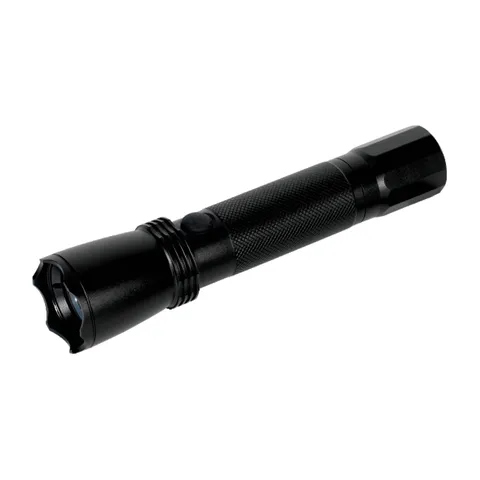
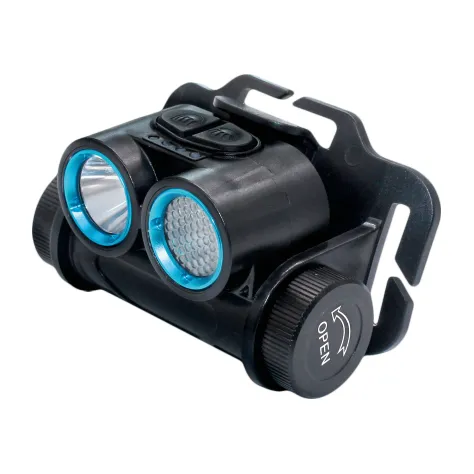
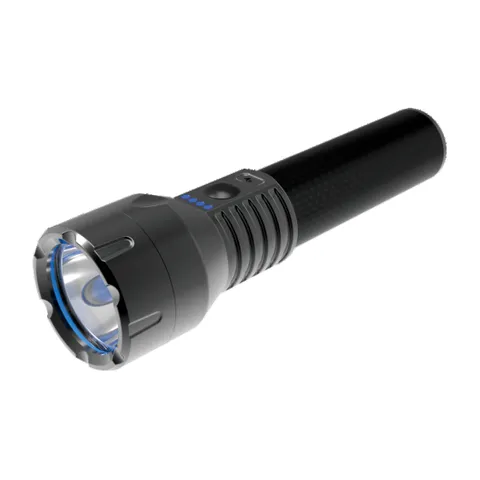
- Zone 1 and Zone 2 work: Gb lights. This covers almost all operations, maintenance and turnaround work. Every Ex model on this site, such as the HZ7623 flashlight and HZ5135 headlamp, is Gb.
- Zone 0 entry: needs Ga equipment, meaning ia intrinsic safety. In practice tanks are usually cleaned, gas-freed and re-classified before entry; check the permit-to-work.
- Unclassified areas: general industrial lights such as the HZ7520 are acceptable and usually cheaper, but keep them physically separate so they are not carried into the plant by mistake.
Area lighting in hazardous zones
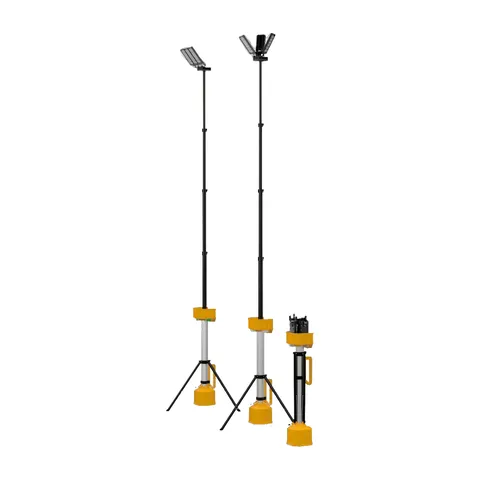
Larger lights raise a different problem: generator-powered light towers are not Ex-certified and must stay outside classified areas. For lighting inside Zone 1 during a turnaround or an incident, use battery area lights with an Ex marking, such as the HZ6129 (180W, 3.8 m) or the lighter HZ6125 (100W, 2.2 m), both Ex eb ib mb IIC T6 Gb. Generator towers can then light the approaches from outside the zone.
Charging, batteries and hot work permits
- Charge lights only outside the hazardous area unless the certificate states otherwise.
- Use only the battery type named on the certificate.
- Remove damaged lights from service; a cracked lens or housing can void the protection.
- Some sites treat any non-Ex electrical item as a source of ignition that needs a hot work permit. Check your site rules before bringing in general lights.
Worked example: a road tanker loading bay
A typical petrol loading bay shows how quickly zones change over a few metres, and why portable lights are rated for the worst case:
| Location | Typical zone | What a worker does there |
|---|---|---|
| Inside the tanker compartment | Zone 0 | Nobody enters during loading |
| Around the open hatch and loading arm | Zone 1 | Connects the arm, checks levels at night |
| The rest of the bay, a few metres out | Zone 2 | Walks round the vehicle, checks earthing |
| Control room and driver area | Unclassified | Paperwork |
The operator walks from the control room through Zone 2 to the hatch in Zone 1 on every load. A Gb headlamp such as the HZ5130 covers the whole route; a Gc light would not be allowed at the hatch, and a general torch would not be allowed past the control room door. The actual zone extents on your site come from its own classification drawing, not from this example.
Checklist for specifying portable lights
- Get the hazardous area drawing and list every zone, gas group and temperature class on the work route.
- Choose the EPL for the worst zone (Gb for Zone 1).
- Confirm gas group (IIC covers all) and temperature class.
- Confirm the certification scheme your site or country accepts.
- Decide on charging points outside the zone and on a register of Ex equipment with certificate copies.
Frequently asked questions
Can a Zone 2 light be used in Zone 1?
No. Equipment can only go into the zone it is rated for or a less hazardous one. A Gc (Zone 2) light is not allowed in Zone 1.
What EPL do I need for Zone 1?
Gb or Ga. In ATEX terms, category 2G or 1G.
Is Class I Division 1 the same as Zone 1?
Not exactly. Division 1 covers both Zone 0 and Zone 1 conditions. North American sites also require North American certification.
Who decides the zone?
The site's operator, usually through process safety engineers following IEC 60079-10-1 or national codes. Buyers should work from the site's classification drawing, not guess.
Can I use a generator light tower near a refinery unit?
Only outside the classified area. Inside Zone 1 or Zone 2, use Ex-certified battery area lights.
Further reading
- IECEx: International Electrotechnical Commission System for Certification to Standards Relating to Equipment for Use in Explosive Atmospheres
- European Commission: Equipment for potentially explosive atmospheres (ATEX)
Need lights for a project? Send the zone, gas group and quantities and we will suggest models and a price.
Get a quote