Lighting a confined space looks simple: get some light inside the tank so people can work. In practice it is one of the places where lighting choices most often go wrong. The atmosphere inside can change during the job, the steel walls make electric shock more dangerous, cables block the only exit, and if the single work light fails, the people inside are in complete darkness inside a steel box.
This guide is for maintenance planners, tank-cleaning contractors and safety officers who need to light storage tanks, process vessels, reactors, cargo tanks, ballast tanks, silos and pits. It covers the rules that drive the choice, then gives a practical layout and kit list.
What the rules ask for
Confined-space regulations rarely specify a particular light, but they set the conditions the lighting must meet. In the United States, OSHA's permit-required confined spaces standard, 29 CFR 1910.146, requires employers to provide "lighting equipment needed to enable employees to see well enough to work safely and to exit the space quickly in an emergency." The same standard treats an atmosphere with flammable gas, vapour or mist above 10% of its lower flammable limit (LFL) as hazardous. Other countries have equivalent rules, and most company permit-to-work systems add their own requirements.
Two points come out of this for lighting. First, the light must be good enough for the task and for escape, so a plan needs more than one light. Second, flammable atmospheres are expected and monitored, so the lighting has to be safe if gas is present.
Why a gas-free certificate does not mean ordinary lights
A tank that has been drained, ventilated and tested may read 0% LFL at the start of the shift. It can still release vapour during the job:
- Sludge, scale and residue on the floor and walls give off vapour when disturbed, especially when cleaning starts.
- Steam cleaning, hot weather and sunlight on the shell all raise the temperature and increase evaporation.
- Vapour can collect in low points, sumps and behind internals where the gas detector is not.
- Adjacent lines or tanks can leak through a passing valve if isolation is not perfect.
For these reasons, most permits for vessels that held flammable products require explosion-protected lighting inside the vessel throughout the job, even after gas-freeing. The usual minimum is equipment for Zone 1 (EPL Gb), with the gas group and temperature class matched to the product the tank held. See Zone 0, 1 and 2 explained for how zones map to equipment.
One more limit is often missed: Ex certification is valid for normal atmospheric conditions. It does not cover oxygen-enriched atmospheres. If a vessel is being purged with oxygen or there is any risk of enrichment, the lighting plan needs separate assessment.
Electric shock: the second hazard
Inside a steel tank the worker is surrounded by earthed metal, often wet, and frequently kneeling or lying on it. A fault in a mains-voltage lamp can be fatal in these conditions. That is why electrical standards treat these "restrictive conductive locations" specially, and why most site rules allow only:
- Battery lights, which have no external supply at all, or
- Extra-low-voltage corded lamps (typically 12 V to 36 V) fed from a safety isolating transformer placed outside the vessel.
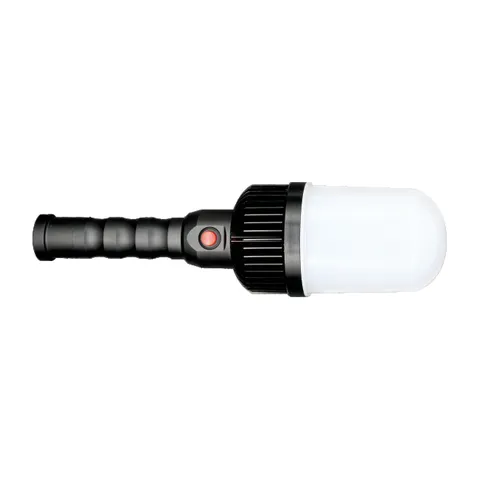
Mains-voltage hand lamps should not go inside a conductive vessel. If a corded lamp is used, the transformer stays outside, the cable is protected where it passes through the manway, and the lamp is inspected before each use. Our HZ6320 hand lamp is available in an AC/DC 12–36 V version for this reason.
Battery or corded?
| Factor | Battery lights | Low-voltage corded lights |
|---|---|---|
| Shock risk | None from an external supply | Low, if the transformer and cable are in good condition |
| Manway | Kept clear for entry and rescue | Cable passes through the manway |
| Trip hazards | None | Cable on the floor and ladder |
| Runtime | Limited by battery; plan charging or spares | Unlimited while the supply is on |
| Setup | Carry in and switch on | Transformer, cable route, inspection |
| Best for | Most tank entries, rescue standby, short jobs | Long jobs in one spot, high output needed all day |
Our recommendation for most entries is battery lighting. Keeping the manway clear matters: it is usually the only way out and the only way a rescue team can get in.
How much light inside the vessel
Few confined-space rules give a number, so planners borrow from general workplace standards. OSHA 1926.56, for example, sets 5 foot-candles (about 54 lux) as a minimum for general construction areas and tunnels, rising to 10 foot-candles (about 108 lux) at tunnel headings during drilling. Treat these as floors. Inspection, weld preparation and coating work need considerably more light at the work surface, and that is where a headlamp or hand light adds to the area light.
Three practical rules for the layout:
- Light the space, then the task. One or more area lights give general visibility and show the way out. Each worker then carries a personal light for close work.
- Light the exit. The route to the manway and the manway itself should stay lit whatever happens to the work light.
- Keep glare off the entrant's eyes. Steel walls and fresh coating are reflective. Point area lights at the walls or the ceiling rather than straight at people.
Every entrant carries an independent light
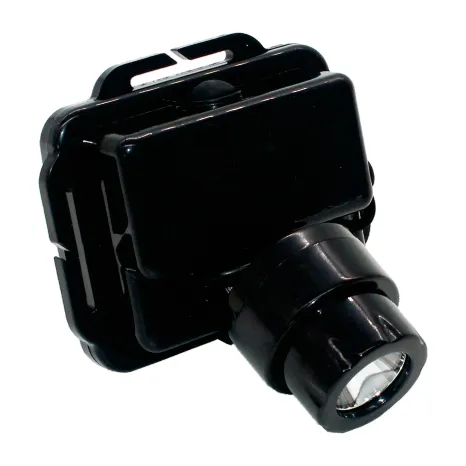
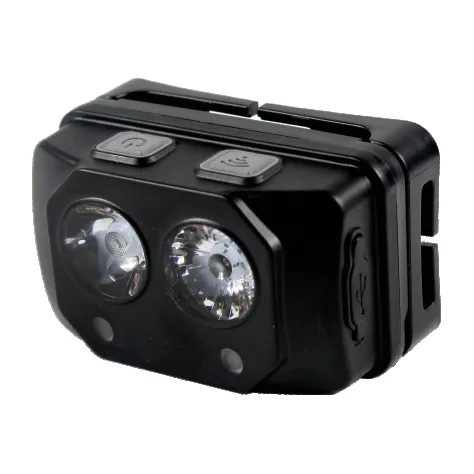
If the only light in the vessel is a single area lamp and it fails, falls or is knocked over, the people inside have to find a manway in total darkness, possibly in breathing apparatus. Each person who enters should carry a light of their own that does not depend on the area light: an explosion-proof headlamp, such as the HZ5130, leaves both hands free for the ladder. A second, hand-held light is good practice for the hole watch outside, so they can see into the vessel and guide people out. Our headlamp guide covers how to choose one.
Choosing lights for the job
| Role | What to look for | Example model |
|---|---|---|
| Personal light for each entrant | Zone 1 headlamp, 16 h working mode, fits the helmet | HZ5130, HZ5133B/C (IP68) |
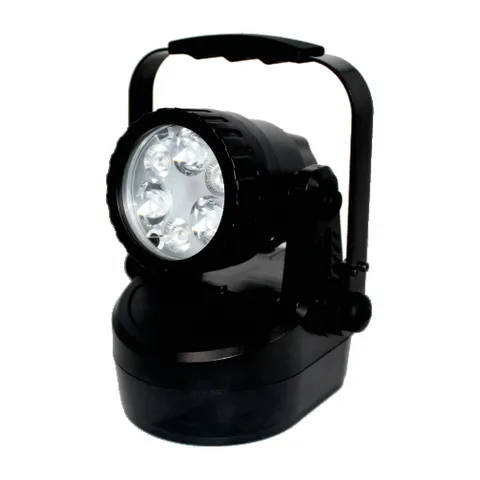
| Area light in small and medium vessels | Free-standing, long runtime, swivelling head, fits through the manway | HZ5282, 12W, up to 80 h on low, Ex db eb ib mb IIC T6 Gb |
| Area light in large tanks | High output on a mast, spot and flood heads | HZ6103, 50W on a 1.5 m telescopic stand |
| Inspection of nozzles, internals and welds | Slim body, torch plus flood tube | HZ6601 (IP66), HZ6610 (Ø32 mm) |
| Fixed-position corded lighting | 12–36 V supply, transformer outside | HZ6320 (check the certificate against your zone) |
Before ordering, check the size of the manway against the light. A typical manway is 450–600 mm (18–24 in). The HZ6103 stows to 280 × 290 mm, so it passes through a standard 600 mm manway, but in a 450 mm opening it is tight once the worker is in the way. A smaller light such as the HZ5282 (172 × 156 mm) is easier to pass in and out.
Two more checks: the temperature class must suit the product the vessel held (T6 lights cover every class), and the housing must withstand the cleaning chemicals in use. IP66 handles water jets and washdown; the HZ6610's IP54 rating is fine for dry inspection but not for wet cleaning.
Sample lighting kit for a two-person tank entry
A medium storage tank with one 600 mm manway, two entrants and one hole watch, on a 10–12 hour cleaning shift:
- 2 × explosion-proof headlamps for the entrants, plus 1 spare (charged outside the hazardous area before the shift).
- 2 × HZ5282 portable area lights inside the tank: one near the work, one lighting the route to the manway. At the work setting each runs for at least 24 hours, so one charge covers the shift.
- 1 × HZ6601 inspection light for the entrants for close checks of welds and nozzles.
- 1 × hand light or headlamp for the hole watch.
- Charging station and spares in the safe area, with a log of which lamp is charged.
For larger tanks, add an HZ6103 50W mast light near the centre of the work area. For rescue standby, the rescue team brings its own lighting so it does not depend on lights already inside.
Pre-entry lighting checklist
- Is every light inside the vessel marked for the zone, gas group and temperature class on the permit?
- Are corded lamps extra-low voltage, with the transformer outside the vessel?
- Does every entrant carry an independent light?
- Is the route to the manway lit, and is the manway clear of cables where possible?
- Are all lamps charged, undamaged, with seals and lenses intact?
- Will charging and battery changes be done outside the hazardous area?
- Has the plan considered oxygen enrichment, if relevant?
We supply complete lighting kits for tank-cleaning contractors and plant maintenance teams, under our brand or yours. Tell us the vessel size, manway diameter, zone and product through the inquiry form, and we will propose a kit.
Frequently asked questions
Do I need explosion-proof lights inside a tank that has been gas-freed?
In most cases yes. Residue, sludge and cleaning can release vapour during the job, so most permits require explosion-protected lighting inside vessels that held flammable products, usually rated for Zone 1.
What voltage is allowed for hand lamps inside a metal tank?
Most site rules allow only battery lamps or extra-low-voltage lamps (typically 12–36 V, lower in wet or very tight vessels) supplied from a safety isolating transformer outside the vessel. Check your local regulations and permit.
How much light is needed inside a confined space?
Rules seldom give a figure. General standards such as OSHA 1926.56 set about 54 lux for general work areas; inspection and coating work need more at the work surface, usually from a headlamp or hand light.
Why should each entrant carry a separate light?
If the only area light fails, the entrant must still be able to see the way out. OSHA 1910.146 requires lighting that lets workers exit quickly in an emergency.
Will a 50W work light fit through a manway?
The HZ6103 stows to 280 × 290 mm and passes through a standard 600 mm (24 in) manway. For 450 mm openings, a smaller unit such as the HZ5282 is easier to handle.
Further reading
- OSHA 29 CFR 1910.146: Permit-required confined spaces
- OSHA 29 CFR 1926.56: Illumination
- IECEx: International Electrotechnical Commission System for Certification to Standards Relating to Equipment for Use in Explosive Atmospheres
Need lights for a project? Send the zone, gas group and quantities and we will suggest models and a price.
Get a quote