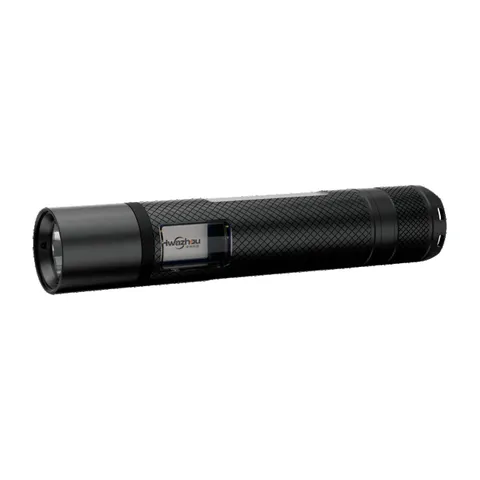
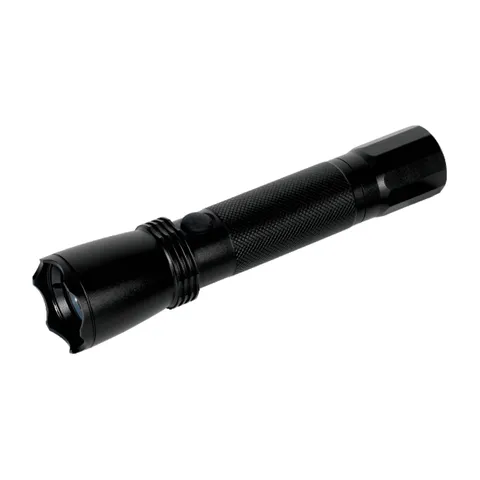
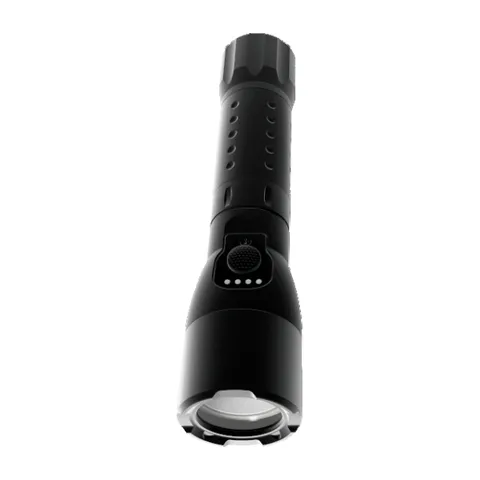
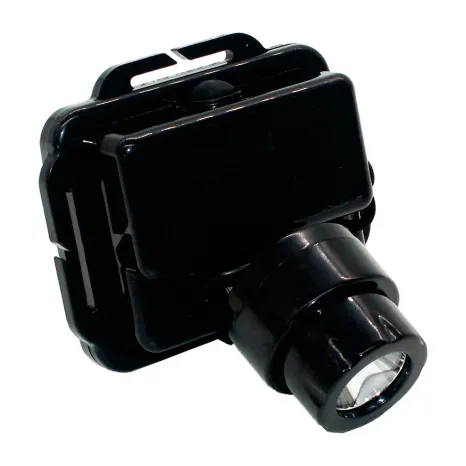
A large share of the explosion-proof flashlights and headlamps on the world market are made in China, under the factory's own brand or under the buyer's. Buying direct can cut cost significantly, but it moves work onto the buyer: checking that the factory is real, that the certificate covers the exact model, that the battery can be shipped legally, and that the 500th light matches the sample.
This checklist walks through a first order step by step, from shortlisting suppliers to receiving the goods.
1. Know who you are talking to
| Supplier type | What it means for you |
|---|---|
| Manufacturer | Designs and builds the lights and holds the Ex certificates. Best for price, OEM and technical answers; minimum quantities may apply to branded orders. |
| Manufacturer's export platform | A sales channel run for one factory, such as ExLight Sourcing for Huazhou Technology (Guangdong) Co., Ltd.. Factory pricing and certificates, with export-ready communication and documents. |
| Trading company | Sources from several factories. Useful for mixed categories, but ask whose name is on the certificate and who handles warranty. |
| Marketplace listing | Can be any of the above. Check the company name against the certificate holder before relying on any claim. |
The simplest test: ask for the Ex certificate of the model you want and compare the certificate holder and production address with the company you are dealing with.
2. Check the certificate, not the brochure
- Model match: the certificate must name the exact model, including suffixes. A certificate for a similar model does not count.
- Validity: check the issue and expiry dates. Chinese Ex certificates expire and must be renewed; an expired certificate is not valid evidence, however genuine it looks.
- Scheme: since October 2020, explosion-proof electrical products sold in China need CCC certification. For other markets you may need ATEX, IECEx or a national scheme; see which certificate each market requires.
- Conditions: read the special conditions (the "X"), such as the specified battery cell and charging only in safe areas.
- Marking: the label on the sample must match the certificate character for character. Our Ex marking guide explains each part.
3. Understand what drives the price
Two flashlights that look alike can differ several-fold in price. The main drivers are:
- Protection type: intrinsically safe (Ex ib) pocket lights are usually the least expensive; flameproof bodies (Ex d) cost more in machining and material.
- Temperature class and gas group: T6 and IIC designs need more engineering than T4 or IIB.
- Battery: capacity, cell quality and pack design affect both cost and runtime.
- Sealing: IP66 / IP68 with a stated depth costs more than IP66 alone.
- Certification scheme: lights certified for additional schemes carry the cost of that testing and audit.
- Branding and packaging: logo, colour and printed boxes add set-up costs that spread over the quantity.
- Quantity: unit price falls with volume, especially for OEM orders.
When comparing quotations, compare like with like: same marking, same IP rating, same battery capacity and the same certificate scheme.
4. MOQ, samples and lead time
- MOQ: standard models can often be ordered in small mixed quantities across several models. Private-label orders need a higher quantity per model to cover set-up. Ask for the MOQ per model, not per order.
- Samples: order samples of every model before a first bulk order, test them in your own conditions, and keep one sealed "golden sample" to compare with the bulk shipment.
- Lead time: standard models from stock or a running batch ship fastest; OEM orders add time for artwork, printed packaging and approval. Ask for lead time per model in writing, from deposit to ready for shipment.
- Payment terms: common terms in Chinese export trade are a deposit with balance before shipment (T/T) or a letter of credit for larger orders. Agree terms before production starts.
5. Shipping lithium batteries legally
Almost all modern explosion-proof lights contain lithium-ion batteries, which are dangerous goods in transport. Lights with batteries installed normally ship as "lithium ion batteries contained in equipment" (UN 3481). For a smooth shipment ask the supplier for:
- A safety data sheet (SDS) for the battery or product.
- The UN 38.3 test summary for the cell or battery, required for lithium batteries in transport.
- Correct dangerous-goods marking and packaging, and the air or sea declaration your forwarder needs.
Sea freight is the usual route for bulk orders; air freight of lithium batteries is tightly regulated under the IATA Dangerous Goods Regulations, so confirm with your forwarder before booking.
6. Inspect before you pay the balance
A pre-shipment inspection, by your own staff or a third-party inspection company, is worth its cost on a first order. A practical checklist for explosion-proof lights:
- Rating label present, readable and identical to the certificate on every unit sampled.
- All modes work; brightness matches the golden sample.
- Runtime test on a few units on the working setting.
- Closures, seals and charging covers fit properly; no missing screws.
- Charger, manual (in your language) and accessories in every box.
- Carton marking, dangerous-goods labels and quantities match the packing list.
Agree the sampling level (often an AQL plan) and the acceptance criteria with the supplier before production.
7. Red flags
- An "ATEX" or "IECEx" claim with no certificate number, or a number that does not appear in the official database.
- A certificate in another company's name with no explanation of the relationship.
- Expired certificates, or certificates for a different model.
- Lumen figures far above what the protection type allows; an intrinsically safe pocket light with "2,000 lumens" deserves questions.
- No mention of battery shipping documents.
- Reluctance to send samples or arrange a video call from the factory floor.
A request for quotation you can copy
Sending a complete RFQ gets you comparable quotes faster:
- Model(s) and quantity per model; standard or private label.
- Required marking (zone, gas group, temperature class) and certification scheme.
- Required IP rating, including immersion depth if needed.
- Battery and charger requirements (plug type, voltage).
- Packaging and manual language.
- Destination port and Incoterm (for example FOB or CIF).
- Requested documents: certificate copy, SDS, UN 38.3 test summary, test report for IP.
- Sample quantity and target delivery date.
Send your RFQ through our inquiry form or on WhatsApp and we will answer with prices, MOQ per model, lead time and the current certificate for each model. For branded orders, see OEM and private label; for choosing models, our flashlight buying guide.
Frequently asked questions
Is it safe to buy explosion-proof flashlights from China?
Yes, if you check the certificate for the exact model and its validity, test samples, and inspect the bulk order before shipment. A large share of explosion-proof portable lights on the world market is made in China.
What is the MOQ for explosion-proof flashlights?
Standard models can often be ordered in small mixed quantities; private-label orders need a higher quantity per model. Always ask for the MOQ per model.
Which documents are needed to ship lithium battery flashlights?
Usually a safety data sheet, the UN 38.3 test summary for the battery, and correct dangerous-goods marking and declaration for UN 3481 (lithium ion batteries contained in equipment).
How can I check a Chinese Ex certificate?
Compare the model, holder, address and dates with the supplier, and ask for the certificate number; CCC certificates can be checked through China's official certification information platform.
Should I order samples first?
Yes. Test samples of every model in your own conditions and keep one sealed as a golden sample to compare with the bulk shipment.
Further reading
- IECEx: International Electrotechnical Commission System for Certification to Standards Relating to Equipment for Use in Explosive Atmospheres
- MPR China Certification: CCC certification for explosion protection products in China
- IATA: Lithium batteries
Industries: Oil, Gas & Petrochemical · Mining & Tunnelling
Product lines: Explosion-Proof Flashlights · Explosion-Proof Headlamps
Need lights for a project? Send the zone, gas group and quantities and we will suggest models and a price.
Get a quote