Mining is one of the largest markets for portable lighting, and one of the most confusing for buyers, because the explosion-protection rules for mines differ from those for refineries and chemical plants. A light that is perfectly legal in a Zone 1 gas plant may not be allowed in an underground coal mine, and a mine's lamp room may need approvals that a refinery never asks for.
This guide explains the difference between Group I and Group II equipment, which approvals mines require in different regions, where Group II explosion-proof lights are the right choice in mining, and how to choose cap lamps and headlamps for a mine.
Group I and Group II: two different worlds
| Group I | Group II | |
|---|---|---|
| Where it applies | Mines susceptible to firedamp (methane), in practice underground coal mines | All other places with an explosive gas atmosphere: oil and gas, chemicals, surface industry |
| Protection levels | Ma (stays energised in a gas atmosphere), Mb (de-energised when gas is detected) | Ga, Gb, Gc for Zone 0, 1 and 2 |
| Example marking | Ex ia I Ma | Ex ib IIC T4 Gb |
| Typical extra requirements | Restrictions on light metals in housings, coal dust layers, very rough handling, national mining approval | Gas group and temperature class matched to the site |
The two groups are not interchangeable. A Group II light, even one marked IIC, is not certified for an underground coal mine, and equipment certified only for Group I is not certified for surface gas areas. Some lights are certified for both and carry both markings. Dust is a third case: coal handling plants, conveyors and silos may be classified for combustible dust (Group III, marked for example Ex tb IIIC), which a gas-only marking does not cover. For how markings are built, see how to read an Ex marking.
Mining approvals by region
On top of the explosion-protection certificate, many countries require a separate mining approval for equipment used underground in coal mines. Examples:
- China: coal mine equipment needs the MA mining safety mark in addition to Ex certification.
- United States: lamps for underground mines are approved by MSHA, separately from UL listings for surface hazardous locations.
- Eurasian Economic Union: TR CU 012/2011 covers both groups; mining equipment carries the PB (РВ) marking for Group I.
- European Union: ATEX equipment group I, categories M1 and M2.
- Australia and others: IECEx certification is widely used, often with additional state mining requirements.
Always confirm with the mine's electrical engineer which approvals apply before ordering lights for underground coal.
Where Group II explosion-proof lights belong in mining
Most mining activity is not in underground coal. Metal and mineral mines, open pits and processing plants have smaller, local hazardous areas where Group II lights are the correct choice:
| Location | Hazard | Suitable lights |
|---|---|---|
| Fuel bays and refuelling stations, surface and underground | Diesel and gasoline vapour | IIA or better flashlights and headlamps; IIC covers all |
| Battery charging bays for mine vehicles and lamp rooms | Hydrogen from lead-acid batteries | IIC lights; see the battery room guide |
| Solvent extraction plants (copper SX-EW) | Flammable kerosene-based diluents | IIA or better, T3 or better; IIC T4 lights cover it |
| Gas-prone ground in non-coal mines and tunnels | Methane or other gases encountered during excavation | Follow the local rules; some jurisdictions apply Group I requirements to gassy tunnels |
| Workshops, warehouses, open-pit benches | Usually not classified | General industrial lights are acceptable outside classified areas |
Our explosion-proof lights are Group II (for example Ex ib IIC T4 Gb) and suit these areas. They are not certified for underground coal mines.
Cap lamps or headlamps?
The traditional mining cap lamp has a lamp on the helmet connected by a cable to a battery on the belt. It gives very long runtime and a battery that is easy to swap at the lamp room. Modern cordless headlamps put the battery in the head unit, which removes the cable snag hazard and makes the lamp lighter for surface and plant work.
| Corded cap lamp | Cordless headlamp | |
|---|---|---|
| Runtime | Very long; large belt battery | Shift length; for example 16 h on work mode on the HZ5130 |
| Weight on the head | Light head unit, battery on the belt | Everything on the helmet, about 90–110 g |
| Snag hazard | Cable can catch on equipment | No cable |
| Typical use | Underground production crews | Plant, maintenance, surface and shorter underground tasks |
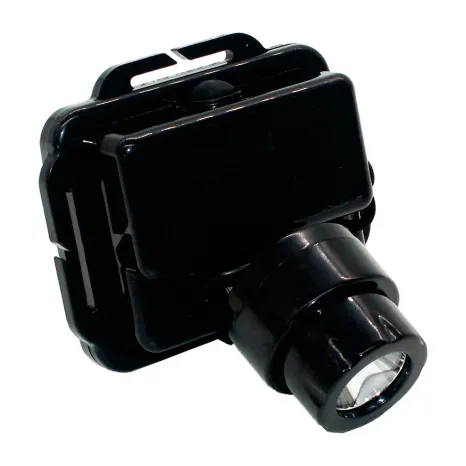
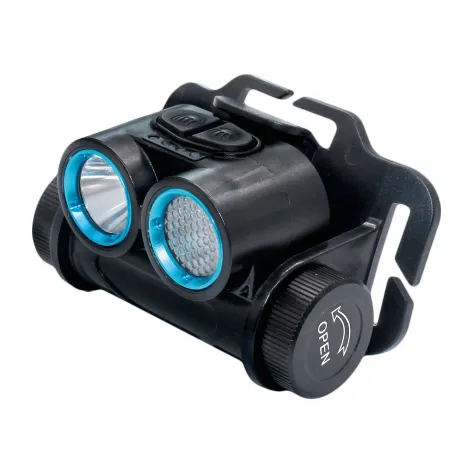
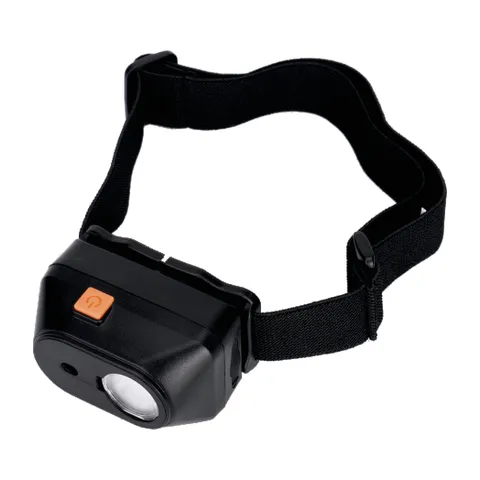
For explosion-protected headlamps in Group II areas, the HZ5130, the dual-beam HZ5135 and the BAD308E with sliding diffuser are all marked Ex ib IIC T4 Gb and IP66. Our headlamp guide covers beam, weight and helmet fit in detail.
What else a mine needs
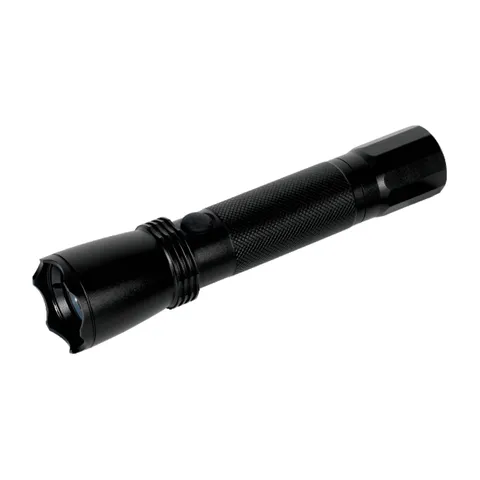
- Hand-held lights for inspection: a long-runtime flashlight such as the HZ7623 for checking conveyors, crushers and pumps.
- Work lights for breakdowns: battery mast lights such as the HZ6103 for repairs in fuel bays and plants; see the work light guide.
- Area lighting for open pits: generator or mains light towers outside classified areas; see portable light towers.
- Position and warning lights to mark hazards and refuge points; the HZ4800 is Ex ib IIC T4 Gb.
Water, dust and the lamp room
Mines are wet and dirty. Specify IP66 at least and IP68 where lights may be submerged in sumps or drains (IP ratings explained). Lamps should be cleaned, inspected and charged in the lamp room at the end of every shift, away from any hazardous area; a central charger such as the HZ1110 suits smaller crews. Lamp check-in also supports personnel accounting at shift change. Our maintenance guide lists what to inspect.
Buying checklist for mines
- Coal or non-coal; underground, open pit or processing plant.
- Group I approval needed, or Group II (gas group and temperature class), or Group III for dust.
- National mining approval required, if any.
- Shift length and required runtime, plus a reserve for emergencies.
- Helmet type and mounting.
- Lamp room charging arrangement and spares, typically 10–20% above crew numbers.
Tell us your mine type, areas and crew numbers through the quote form and we will propose lights for each area. For general mining applications, see our mining and tunnelling page.
Frequently asked questions
What is the difference between Group I and Group II lights?
Group I equipment is certified for mines susceptible to firedamp, in practice underground coal mines, with protection levels Ma or Mb. Group II equipment is for all other explosive gas atmospheres, with levels Ga, Gb or Gc.
Can I use an IIC explosion-proof headlamp in an underground coal mine?
Not on the strength of a Group II marking. Underground coal mines need Group I certification and, in many countries, a national mining approval such as MA in China or MSHA in the US.
Where are Group II lights used in mining?
In fuel bays, battery charging areas, solvent extraction plants and other classified areas of metal mines, open pits and processing plants.
Are cap lamps better than cordless headlamps?
Corded cap lamps give very long runtime for underground production crews; cordless headlamps are lighter and have no cable to snag, which suits plant, maintenance and surface work.
Do I need dust-rated lights in a coal handling plant?
Possibly. Coal handling, conveyors and silos can be classified for combustible dust (Group III), which a gas-only marking does not cover. Check the area classification.
Further reading
- MSHA: Mine Safety and Health Administration
- IECEx: International Electrotechnical Commission System for Certification to Standards Relating to Equipment for Use in Explosive Atmospheres
- European Commission: Equipment for potentially explosive atmospheres (ATEX)
- IEC: Ingress Protection (IP) ratings, IEC 60529
Industries: Mining & Tunnelling
Product lines: Explosion-Proof Headlamps · Work & Inspection Lights
Need lights for a project? Send the zone, gas group and quantities and we will suggest models and a price.
Get a quote