Fixed lighting in a refinery or gas plant is engineered once, inspected on a schedule and rarely moves. Portable lighting is different: flashlights, headlamps and work lights are carried from the control room into Zone 1, dropped from platforms, left in the rain and charged wherever there is a socket. That makes portable lights the part of the lighting system most likely to be wrong for the area it is used in.
This guide sets out what explosion-proof portable lighting an oil and gas site needs: which marking covers the gases on site, which lights suit each area and each job, and how to manage a fleet of lights so that every unit in the field stays safe. For the industry overview, see our oil, gas and petrochemical lighting page.
Start with the gases: group and temperature class
Every flammable substance has a gas group (how easily a flame passes through a gap) and an auto-ignition temperature (how hot a surface must be to ignite it). The light's marking must cover both. Typical values for gases found on oil and gas sites:
| Substance | Gas group | Approx. auto-ignition | Minimum T-class |
|---|---|---|---|
| Methane (natural gas) | IIA | about 535 °C | T1 |
| Gasoline / naphtha | IIA | about 280 °C | T3 |
| Hydrogen sulphide (H₂S) | IIB | about 260 °C | T3 |
| Ethylene | IIB | about 440 °C | T2 |
| Hydrogen | IIC | about 560 °C | T1 |
| Acetylene | IIC | about 305 °C | T2 |
| Carbon disulphide | IIC | about 90 °C | T6 |
Values are indicative; use your site's gas data (IEC 60079-20-1 lists the properties). The practical conclusion for portable lights, which move across a whole site, is simple: IIC T4 Gb covers almost every area, and T6 is needed only where carbon disulphide or similar low-ignition substances are handled. Refineries with hydrotreaters, hydrocrackers or hydrogen plants need IIC regardless; see our hydrogen lighting guide. If any part of the marking is unfamiliar, read how to read an Ex marking.
Lights for each area of an oil and gas site
| Area | Typical classification | Portable lights that fit |
|---|---|---|
| Drilling rig and wellsite: wellhead, rig floor, shale shakers, mud tanks | Zone 1 close to sources, Zone 2 around them (API RP 505 / IEC 60079-10-1) | IIC headlamps for the rig crew, flashlights for checks, a work light for night repairs |
| Refinery process units | Zone 1 at pumps, compressors, sample points and drains; Zone 2 across the unit | Operator flashlights and headlamps, mast work lights for maintenance |
| Tank farms and loading racks | Zone 1 at vents, hatches and loading arms; Zone 0 inside tanks | Headlamps for gauging and loading, cabled low-voltage lamps or certified lights for tank entry |
| Compressor and pump stations, pipelines | Zone 1 or 2 inside enclosures and around seals | Flashlights with long runtime, a searchlight for patrols along the line |
| LNG and LPG terminals | Zone 1 and 2 around transfer points | IIC lights; check low-temperature operating limits for cold areas |
| Offshore platforms and FPSOs | Zone 1 and 2 across process decks | IP68 lights, salt-resistant finishes; see the offshore guide |
The zone drawing, not the job title, decides what a light must be. Our guide to Zone 0, 1 and 2 explains how the zones are drawn.
Kit by job role
| Role | What they need | Model examples |
|---|---|---|
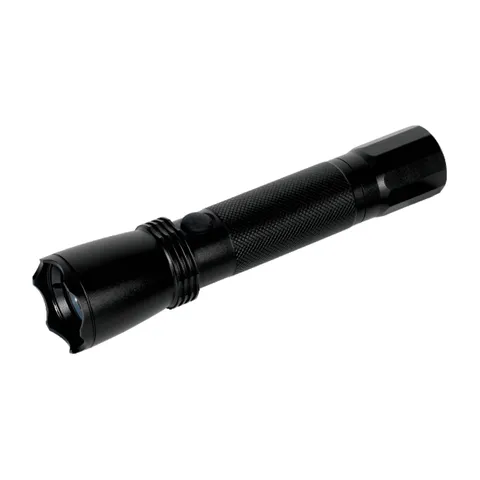
| Field operator on rounds | A pocket or belt flashlight with 16 h on work mode and a headlamp for climbing | HZ7623 (Ex ib IIC T4 Gb), HZ5130 |
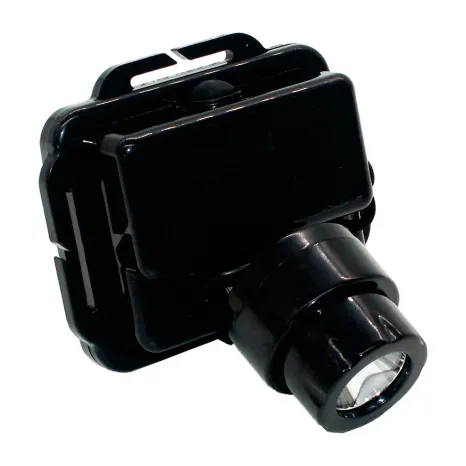
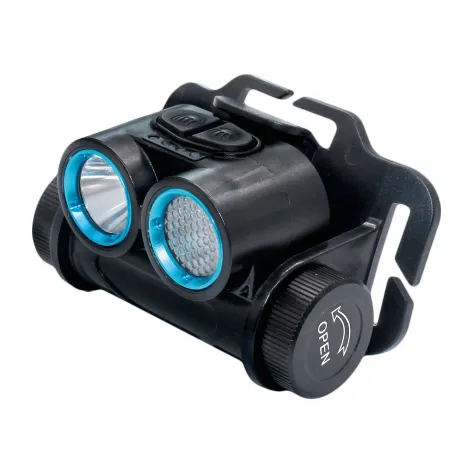
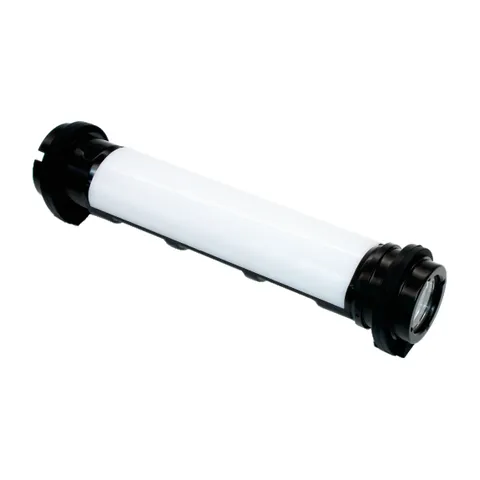
| Maintenance technician | A headlamp with spot and flood, an inspection light and a shared mast work light | HZ5135, HZ6601, HZ6103 |
| Confined space entrant | A headlamp plus a cabled low-voltage lamp or certified area light; see tank lighting | HZ5130, HZ6320 |
| Areas with low-ignition substances | A T6 flashlight | HZ7625 (Ex d ib IIC T6 Gb) |
| Security and pipeline patrol | A hand-held searchlight with long throw | HZ7106A (Ex db ia IIC T6 Gb) |
| Emergency response | Searchlights, a battery tripod system for the scene, position lights to mark hazards | HZ6129, HZ4800 |
| Turnaround contractors | Gate-issued lights, enough for every worker plus spares | See the turnaround lighting plan |
For choosing between mast, area, tube and cabled work lights, see the explosion-proof work light guide.
Specification points that matter on oil and gas sites
- Runtime against shift length. Twelve-hour shifts are common. Specify the work-mode runtime, not the high mode, and allow for overtime; 16 hours is a comfortable target for personal lights.
- Water and weather. Deluge tests, wash-down and tropical rain call for IP66 at least; IP68 with a stated depth for marine and flood-prone sites. See IP ratings explained.
- Hard hat and glove compatibility. Headlamps must fit the site's helmets; switches must work with gloves.
- Drop resistance. Lights fall from pipe racks and stair towers. A drop rating of several metres is worth asking for.
- Certificate the operator accepts. Many oil companies specify IECEx or ATEX regardless of country; North American sites require UL or CSA. UL, ATEX and IECEx certified versions of our lights are available; see which certificate each market requires.
Managing a fleet of portable lights
A site with a few hundred workers can have a thousand portable lights in circulation. Without a system, damaged or non-certified lights end up in Zone 1. A simple fleet routine:
- Register every light in the Ex equipment register with its model, marking and certificate.
- Issue from one point, such as the gate or tool store, and stop personal or consumer torches at the gate.
- Charge only outside the zones, ideally in central charging cases such as the HZ1110.
- Inspect lenses, seals, housings and battery covers at issue and periodically, following IEC 60079-17; our maintenance guide gives a checklist.
- Retire any light with a cracked housing, damaged seal or swollen battery; never repair it with non-approved parts.
Buying checklist
- Gas groups and temperature classes on the area classification drawing
- Number of workers per shift, by role
- Required runtime, IP rating and helmet type
- Certificate scheme required by the operator
- Charging and spare battery plan
- Private label or asset numbering if required
Send the list through our quote form and we will propose a kit by area and role, with prices and certificates for each model.
Frequently asked questions
What Ex marking do portable lights for a refinery need?
Portable lights move across the whole site, so IIC T4 Gb is a practical default: it covers Zone 1 and 2 and almost all refinery gases. Use T6 where carbon disulphide or other low-ignition substances are handled.
Is IIB enough for an oil and gas site?
IIB covers H₂S, ethylene and most hydrocarbons, but not hydrogen or acetylene. Refineries with hydrogen units need IIC, and IIC lights are also acceptable wherever IIB is required.
How long should an explosion-proof flashlight run on a 12-hour shift?
Choose a work-mode runtime of at least 12 hours, ideally around 16, so the light lasts through overtime. The HZ7623 runs about 16 hours on work mode.
Can workers bring their own flashlights onto an oil and gas site?
Only outside classified areas. Consumer flashlights are not certified and can ignite gas; most sites stop them at the gate and issue certified lights.
Where should portable explosion-proof lights be charged?
Only in a designated area outside every hazardous zone, with the charger and battery named on the certificate.
Further reading
- OSHA 29 CFR 1910.307: Hazardous (classified) locations
- IECEx: International Electrotechnical Commission System for Certification to Standards Relating to Equipment for Use in Explosive Atmospheres
- European Commission: Equipment for potentially explosive atmospheres (ATEX)
- IEC: Ingress Protection (IP) ratings, IEC 60529
Industries: Oil, Gas & Petrochemical · Ports, Marine & Offshore
Product lines: Explosion-Proof Flashlights · Explosion-Proof Headlamps · Work & Inspection Lights
Need lights for a project? Send the zone, gas group and quantities and we will suggest models and a price.
Get a quote