In the United States and Canada, buyers rarely search for an "Ex flashlight". They ask for a Class 1 Div 1 flashlight, an intrinsically safe flashlight to UL 913, or a light "rated for Class I, Division 1, Groups C and D". These are the North American ways of describing the same thing the rest of the world calls Ex ib IIC T4 Gb, but the labels, the standards and the certificates are different, and a light certified for Europe or China is not automatically acceptable on a US site.
This guide explains the Class/Division system, how it maps to zones and gas groups, which UL standards apply to portable lights, and what to ask a supplier before you order.
Class, Division and Group in one minute
The National Electrical Code (NFPA 70) classifies hazardous locations in Article 500 by three properties:
| Term | Meaning |
|---|---|
| Class I | Flammable gases or vapours (Class II is combustible dust, Class III fibres and flyings) |
| Division 1 | The hazard can exist in normal operation: during filling, venting, maintenance or from frequent leaks |
| Division 2 | The hazard exists only under abnormal conditions, such as a failed gasket or ruptured container |
| Groups A, B, C, D | Gas families: A acetylene, B hydrogen, C ethylene-type gases, D propane-type gases |
| T-code | Maximum surface temperature, T1 to T6 (the Division system also uses sub-steps such as T3C) |
A typical rating on a US intrinsically safe flashlight therefore reads "Class I, Division 1, Groups C, D, T4". A light listed only for Groups C and D is not suitable where hydrogen or acetylene is present; for those you need Groups A and B as well.
Divisions vs Zones, and Groups vs IIC
NEC Article 505 also allows the international zone system, so many US sites now use both. The two systems line up approximately as follows:
| Division system | Zone system |
|---|---|
| Division 1 | Zone 0 and Zone 1 |
| Division 2 | Zone 2 |
| Group A (acetylene) + Group B (hydrogen) | IIC |
| Group C (ethylene) | IIB |
| Group D (propane) | IIA |
The mapping is a guide, not a substitution rule. Equipment must be approved for the classification on the area drawing; a Zone 1 light is not automatically acceptable in a Division 1 area unless it is listed for it. Zone-rated equipment certified for the US carries the prefix AEx, for example "Class I, Zone 1, AEx ib IIC T4 Gb". In Canada the same marking appears with "Ex" instead of "AEx". Our guide to Zone 0, 1 and 2 covers the zone side in detail.
Which UL standards apply to a flashlight
- UL 913: intrinsically safe apparatus for Division 1 locations. This is the standard behind most "intrinsically safe flashlight" listings in the US.
- UL 60079-11: the US adoption of IEC 60079-11 intrinsic safety for zone-rated equipment (marked AEx ia/ib).
- UL 1203: explosion-proof (flameproof) equipment for Division locations; relevant for heavier flameproof searchlights and work lights.
- UL 60079-0 and 60079-1: general requirements and flameproof enclosures in the zone system.
"UL" in everyday speech often means any Nationally Recognized Testing Laboratory. OSHA (29 CFR 1910.307) requires equipment in hazardous locations to be approved for the class, division or zone and group; in practice that means listing by an NRTL such as UL, CSA, FM or Intertek. Canada uses the Canadian Electrical Code and CSA-type certification, and many lights carry a combined US/Canada mark.
Reading a North American flashlight label
A label on a US-listed intrinsically safe flashlight might show:
Class I, Div 1, Groups A, B, C, D T4 | Class I, Zone 0, AEx ia IIC T4 Ga
- The first part is the Division rating: all four gas groups, temperature code T4 (135 °C).
- The second part is the Zone rating with the US AEx prefix: intrinsic safety level ia, gas group IIC, EPL Ga.
- The listing mark of the laboratory and the file or certificate number sit next to it. Search that number in the lab's directory, for UL in Product iQ.
- Battery instructions and the ambient temperature range are part of the listing; using a different battery voids it.
Practical choices for US sites
| Site | What to specify |
|---|---|
| Refinery, gas plant, tank farm | Class I, Div 1, Groups C and D at least; Groups A–D if hydrogen units or acetylene are on site. T4 or better. |
| Chemical plant with low-ignition solvents | Check the T-code on the area drawing; carbon disulphide areas need T6 (85 °C). |
| Hydrogen, battery rooms, electrolysers | Group B (Division) or IIC (Zone) is mandatory. |
| Grain elevators, flour and sugar handling | Class II dust rating as well as or instead of Class I. |
| Underground mines | Lights for underground mining need MSHA approval, which is a separate scheme from UL. Our Group II lights are for surface industry, tunnels and non-coal mines. |
As with any Ex light, check the runtime on the working mode, the IP rating and the charging arrangement. Our flashlight buying guide lists the eight checks we recommend.
Buying UL-certified lights from a manufacturer
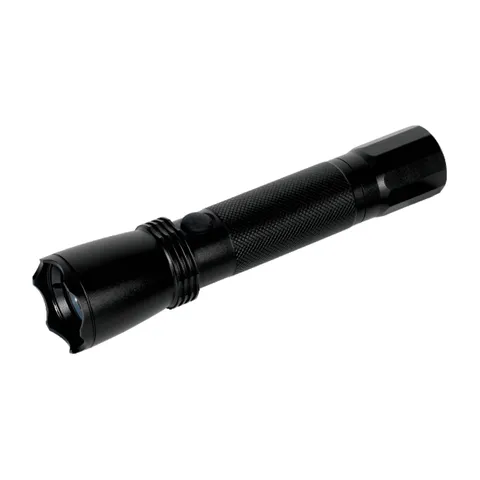
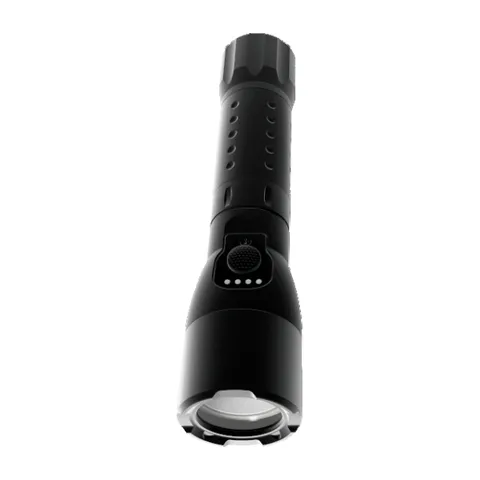
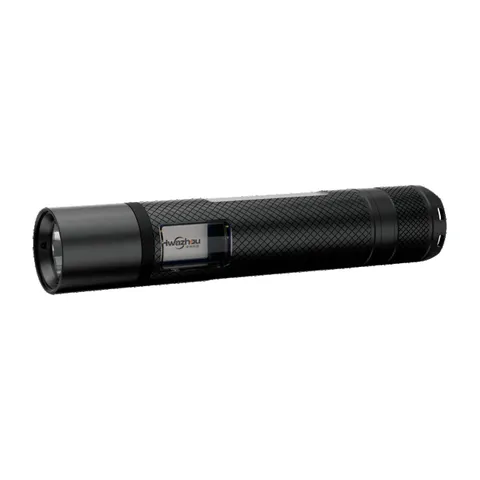
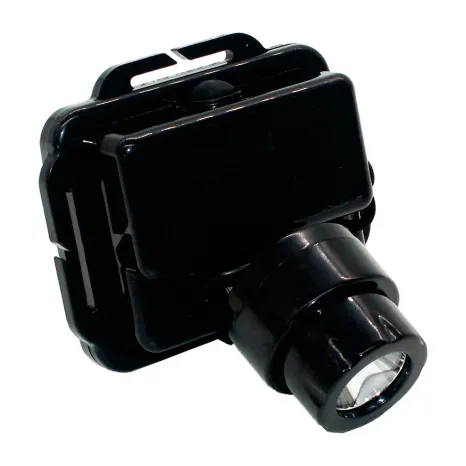
Our Ex-marked flashlights, headlamps and searchlights carry IIC markings (for example HZ7623, Ex ib IIC T4 Gb, and HZ7625, Ex d ib IIC T6 Gb), which in the zone system covers every gas group. UL-certified versions are available, alongside ATEX and IECEx versions. Because each listing covers specific models and ratings, the right way to order for a US or Canadian site is:
- Tell us the classification you need: Class I, Division 1 or Zone 1, the gas groups and the T-code.
- We confirm which models are listed for it and send the listing details, so you can check them in the laboratory's directory before you order.
- Order samples of the listed models and check the label against the listing.
- For private label, agree how your brand appears on the label; the listing stays with the manufacturer unless a separate brand listing is arranged.
If a project needs a rating that a model does not yet have, raise it at the inquiry stage: a new listing takes months. For how US certification compares with ATEX, IECEx and CCC, see which certificate each market requires.
Send your classification, quantities and delivery port through the quote form and we will reply with listed models, prices and lead time.
Frequently asked questions
What is a Class 1 Div 1 flashlight?
A flashlight listed by a recognised laboratory for Class I (flammable gases and vapours), Division 1 (hazard present in normal operation) locations, for stated gas groups and a temperature code, typically by intrinsic safety to UL 913.
Is a Zone 1 flashlight the same as a Class 1 Div 1 flashlight?
They cover similar areas, but they are separate ratings. A light must be listed for the classification used on your area drawing; a Zone 1 rating does not automatically make it acceptable in a Division 1 area.
Which gas groups do I need?
Groups C and D cover most hydrocarbons such as propane, gasoline and ethylene. Add Groups A and B where acetylene or hydrogen is present. In the zone system, IIC covers all four.
What does AEx mean on a label?
AEx marks zone-rated equipment certified to US standards under NEC Article 505, for example Class I, Zone 1, AEx ib IIC T4 Gb.
Do you sell UL-certified intrinsically safe flashlights?
Yes. UL-certified versions are available alongside ATEX and IECEx versions. Tell us the class, division or zone, groups and T-code, and we confirm the listed models and send listing details with the quote.
Further reading
- NFPA 70: National Electrical Code
- OSHA 29 CFR 1910.307: Hazardous (classified) locations
- UL Product iQ: certification directory
- IECEx: International Electrotechnical Commission System for Certification to Standards Relating to Equipment for Use in Explosive Atmospheres
Industries: Oil, Gas & Petrochemical · Ports, Marine & Offshore
Product lines: Explosion-Proof Flashlights
Need lights for a project? Send the zone, gas group and quantities and we will suggest models and a price.
Get a quote