The same product goes by half a dozen names. A safety manager in Texas asks for an "intrinsically safe flashlight", a buyer in Aberdeen for an "ATEX torch", an engineer in Dubai for an "explosion-proof torch", a purchasing officer in Jakarta for a "senter anti ledak" and a Chinese plant for a "防爆手电". Some of these terms are precise, some are loose, and a few are used wrongly. Mixing them up leads to quotations for the wrong product, or worse, the wrong light in the wrong place.
This guide explains each common term, where it is used, and what to check behind it.
The terms at a glance
| Term | Where it is common | What it strictly means | What to check |
|---|---|---|---|
| Intrinsically safe flashlight | North America, oil and gas worldwide | A light protected by intrinsic safety (Ex i or "IS"), which limits energy so no spark or hot surface can ignite gas | The marking really says ia or ib (or IS for North America) |
| Explosion-proof flashlight / torch | Asia, Middle East, general use | Loosely, any light approved for explosive atmospheres. In North America "explosion-proof" strictly means a housing that contains an explosion (like Ex d) | The actual protection type and marking |
| ATEX torch | UK, Europe, offshore | A torch certified under the EU ATEX directive, CE-marked with the Ex hexagon and category (for example II 2 G) | Notified Body number and EU-type examination certificate |
| Ex torch / Ex-rated light | International, IECEx markets | A light with an Ex marking under IEC 60079 rules | Zone, gas group and temperature class in the marking |
| Class I Division 1 flashlight | USA and Canada | A light listed for Class I (gases), Division 1 locations under the North American system | Listing by a recognised lab (UL, CSA, FM, ETL) |
| Hazardous location / hazardous area light | Everywhere | A general description, not a certification | Everything: it says nothing on its own |
| Flameproof torch | UK, India, Australia | A light with a flameproof enclosure (Ex d) | Ex d or db in the marking |
| Non-sparking torch | Informal | No precise meaning for lights; sometimes confused with non-sparking tools | Ask for the Ex marking instead |
"Intrinsically safe" is a protection method, not a synonym
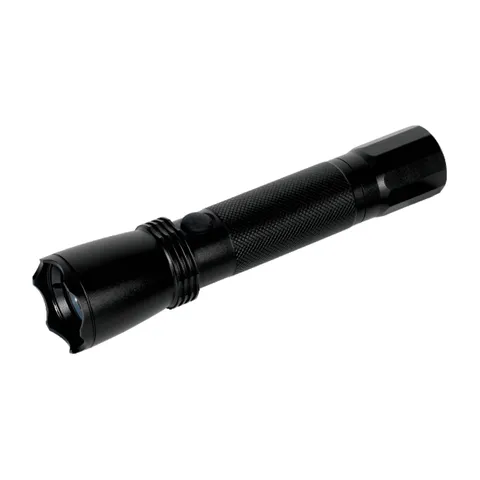
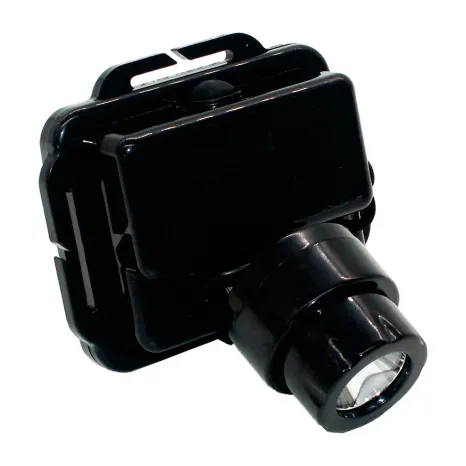
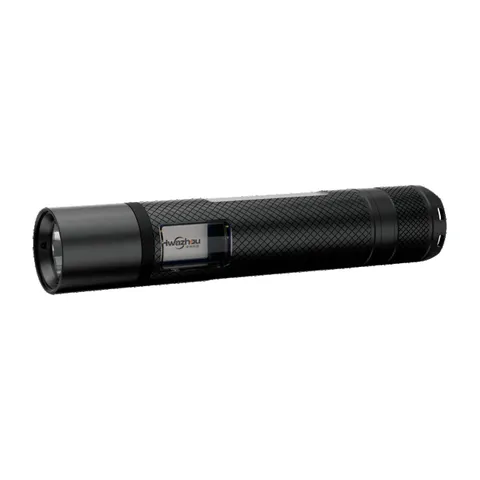
Intrinsic safety is one specific way of preventing ignition: limiting the electrical and thermal energy in the circuit. It is ideal for small lights, which is why most pocket flashlights and headlamps are intrinsically safe, marked for example Ex ib IIC T4 Gb like our HZ7623 and HZ5130.
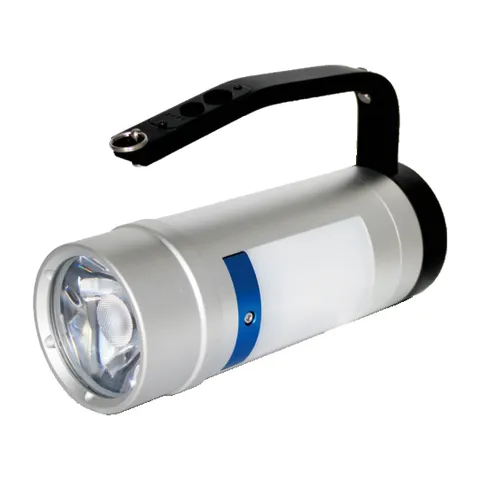
Higher-power lights usually cannot be intrinsically safe and use a flameproof housing instead, often combined with intrinsically safe circuits, such as Ex db ia IIC T6 Gb on our HZ7106A searchlight. Calling such a light "intrinsically safe" is technically wrong, but it is still approved for the same zones. What matters is the marking, not the name. Our intrinsically safe vs flameproof guide covers the difference in detail.
"Explosion-proof" means different things on each side of the Atlantic
In most of the world, "explosion-proof" is used loosely for anything approved for explosive atmospheres. In North American codes, "explosion-proof" is a defined protection method: an enclosure strong enough to contain an internal explosion, close to the IEC flameproof concept. A US buyer asking for an "explosion-proof flashlight" may therefore be using the everyday meaning, or may specifically want a flameproof design. Ask which zone or division the light is for, and let the marking answer the question.
Zones and Divisions: two systems for the same idea
| IEC / ATEX (Zones) | North America (Divisions) | Rough equivalent |
|---|---|---|
| Zone 0 and Zone 1 (EPL Ga, Gb) | Class I, Division 1 | Gas present in normal operation, continuously or occasionally |
| Zone 2 (EPL Gc) | Class I, Division 2 | Gas present only under abnormal conditions |
The systems overlap but are not identical, and in the US and Canada the light must be listed by a recognised laboratory for the classification used on site. A light marked Ex ib IIC T4 Gb is approved for Zone 1 under IEC rules, but that marking alone is not a US listing. See Zone 0, 1 and 2 explained.
The same product in other languages
Buyers search in their own language, and suppliers that describe products in those terms are easier to find:
| Language | Common term |
|---|---|
| Spanish | linterna antiexplosiva, linterna intrínsecamente segura |
| Portuguese | lanterna à prova de explosão |
| French | lampe torche ATEX, lampe antidéflagrante |
| German | ATEX Taschenlampe, Ex-Taschenlampe |
| Russian | взрывозащищённый фонарь |
| Arabic | كشاف مضاد للانفجار |
| Indonesian / Malay | senter anti ledak, lampu suluh kalis letupan |
| Chinese | 防爆手电筒, 本安型手电 |
How to write a request that cannot be misread
Whatever word you use, add the facts that define the product:
- The zone or division where it will be used, and the gas group and temperature class.
- The certification scheme your site accepts (IECEx, ATEX, UL or a national scheme).
- Light type: pocket flashlight, headlamp, searchlight, work light.
- Runtime, battery and IP requirements.
For example: "Headlamp for Zone 1, IIC, T4 or better, IECEx or national certificate, 12-hour shift, IP66." That request gets the right quotation from any supplier, whatever they call the product.
Send us your requirement in any of these terms through the inquiry form and we will match it to the right model and marking. To browse by type, start with our explosion-proof flashlights and headlamps.
Frequently asked questions
Is an intrinsically safe flashlight the same as an explosion-proof flashlight?
Not exactly. Intrinsic safety is one protection method that limits energy; “explosion-proof” is often used loosely for any approved light, and in North America strictly means an enclosure that contains an explosion. Check the marking to see which applies.
What is an ATEX torch?
A torch certified under the EU ATEX directive, CE-marked with the Ex hexagon, equipment group and category, for example II 2 G for Zone 1 gas areas.
Is a Zone 1 flashlight the same as Class I Division 1?
They cover similar situations, but they are different systems. In the US and Canada the light must be listed by a recognised laboratory for the classification used on site.
What does Ex ib IIC T4 Gb mean?
Intrinsically safe level b, tested for all gas groups, surface temperature below 135 °C, suitable for Zone 1 and Zone 2.
Is a non-sparking torch safe in hazardous areas?
The term has no precise meaning for lights. Only a light with a suitable Ex marking and certificate is approved for hazardous areas.
Further reading
- IECEx: International Electrotechnical Commission System for Certification to Standards Relating to Equipment for Use in Explosive Atmospheres
- European Commission: Equipment for potentially explosive atmospheres (ATEX)
Industries: Oil, Gas & Petrochemical · Ports, Marine & Offshore
Product lines: Explosion-Proof Flashlights
Need lights for a project? Send the zone, gas group and quantities and we will suggest models and a price.
Get a quote