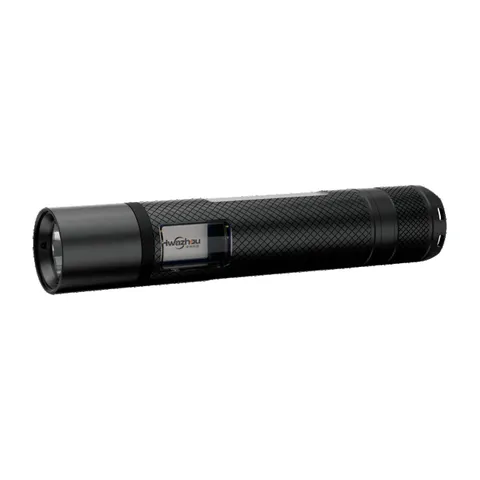
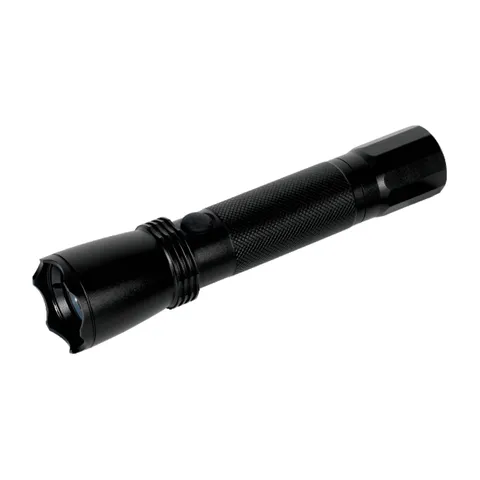
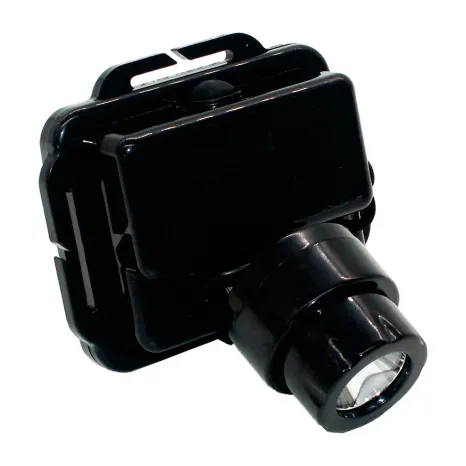
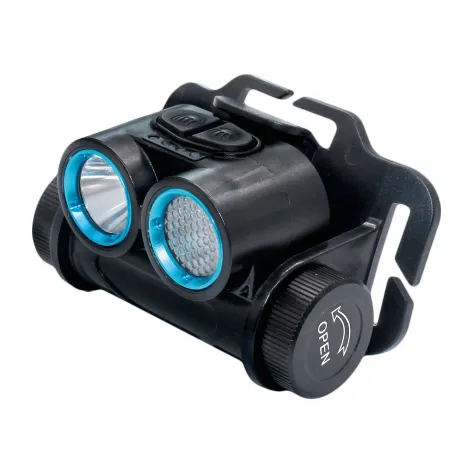
Explosion-proof lights are a natural addition for safety equipment distributors, industrial suppliers, ship chandlers and oil and gas service companies. Customers buy them repeatedly, because portable lights are lost, damaged and replaced every year, and they buy them alongside gas detectors, PPE and tools you may already sell. The challenge is choosing a range that fits your market's certification rules and building enough technical confidence to sell it.
This guide is for importers planning their first explosion-proof lighting line.
Who buys explosion-proof lights
| Customer group | What they buy | How they buy |
|---|---|---|
| Refineries, chemical plants, tank terminals | Flashlights and headlamps for operators; searchlights and area lights | Framework agreements, approved vendor lists, specified marking |
| Maintenance and turnaround contractors | Large batches of headlamps, work lights, tripod lights before each project | Project orders with short deadlines |
| Ship owners and managers | Torches for tankers and offshore vessels, searchlights | Through ship chandlers, often using IMPA marine catalogue codes |
| Fire and rescue services | Searchlights, light towers, warning lights | Tenders with detailed specifications |
| Mining and tunnelling | Headlamps and hand lights | Site safety departments; underground coal needs separate mining approval |
| Utilities and railways | Signal lamps, warning lights, inspection lights | Annual tenders |
Start with the certification your market accepts
Before choosing products, find out which certificates your customers accept: ATEX in the EU, UKEX or CE in Great Britain, NRTL listing in North America, IECEx or national approval in many other countries, and operator-specific requirements on large projects. This single question decides which models you can sell, and in which industries. Our certification guide sets out the main schemes.
If your market needs a scheme the product does not hold yet, plan it with the manufacturer: certification takes months, and the importer often has legal duties of its own, such as labelling and keeping documents in the EU.
A starter range that covers most requests
A focused range of six to eight models answers most enquiries and keeps stock and spares simple. A typical starter range from our catalogue:
| Role | Model | Why |
|---|---|---|
| Pocket intrinsically safe flashlight | HZ7307 | 90 g, IP66 / IP68 (5 m, 2 h); for permit holders and inspectors |
| General-issue Ex flashlight | HZ7623 | 16-hour working mode; the volume seller for maintenance crews |
| Ex headlamp | HZ5130 | 93 g, fits hard hats, 16-hour working mode |
| Ex headlamp with spot and flood | HZ5135 | For inspection and mixed tasks |
| Ex searchlight | HZ7106A | Spot plus side flood; Ex db ia IIC T6 Gb |
| Ex portable area light | HZ5282 | Tank and vessel work, up to 80 hours on low |
| Ex tripod lighting system | HZ6125 | 2.2 m, 8 kg, Zone 1; for turnarounds and fire services |
Add warning lights, railway signal lamps or light towers if your customer base includes utilities, railways or fire services.
Own brand or manufacturer's brand?
- Manufacturer's brand is quicker to launch and needs no artwork or packaging set-up. Good for testing demand.
- Private label builds your own brand and protects your customers from being approached directly. It needs a higher quantity per model, approved artwork and packaging, and a clear understanding of how the certificate and label will read. See OEM and private label and our OEM guide.
Many distributors start with the manufacturer's brand on a few models, then move the best sellers to private label once volumes are proven.
Stock, spares and chargers
- Stock the volume sellers (general-issue flashlights and headlamps); order project items such as tripod lights against firm orders.
- Hold spare chargers and accessories, which customers lose more often than lights.
- Agree spare part availability for seals, lenses and battery packs, and for how many years.
- Plan for battery ageing: lights with lithium batteries should not sit in stock for years. Rotate stock and store at partial charge in a cool place.
- Know the shipping rules for lithium batteries in your country, including for courier deliveries to your customers.
Sales materials that make technical selling easier
Customers expect a distributor to answer technical questions confidently. Ask the manufacturer for:
- Datasheets for each model. Ours are available as PDFs on every product page, in English and Chinese.
- Certificate copies and the marking for each model.
- Photos on white background and in use, for your website and catalogue.
- Short explanations your sales team can reuse, for example on Ex markings, zones and IP ratings.
- For marine customers, the relevant IMPA codes if your chandlers order that way.
Samples and a first order
- Order a sample kit of your starter range and test it with two or three key customers.
- Confirm certification documents for your market before committing to stock.
- Place a first mixed order of the volume sellers; agree MOQ per model and lead time in writing.
- Inspect the first shipment against the samples.
- Review sell-through after three to six months and decide which models move to private label.
Our sourcing checklist covers certificates, battery shipping and inspection in more detail.
Distributor checklist
- Certification schemes your customers accept, by industry.
- Starter range of six to eight models.
- Brand strategy: manufacturer's brand first, or private label.
- Stock plan for volume sellers; project items to order.
- Spares, chargers and battery shelf-life plan.
- Datasheets, certificates and photos for sales.
- Sample kit and first customer trials.
If you are planning an explosion-proof lighting line for your market, tell us your country, customer industries and the certificates your customers ask for through the inquiry form. We will suggest a starter range, MOQ per model and a sample kit.
Frequently asked questions
Which explosion-proof lights sell most to distributors?
General-issue intrinsically safe flashlights and headlamps, because they are issued to every worker in hazardous areas and replaced regularly. Searchlights, work lights and tripod lights sell mainly on projects.
Do I need my own certificate to distribute explosion-proof lights?
Usually not to resell the manufacturer's certified product, but you must sell under a certificate your market accepts, and in the EU an importer has legal duties such as labelling and keeping documents.
Can I sell explosion-proof lights under my own brand?
Yes, through private label. The certificate normally stays in the manufacturer's name, so agree how the label and documents will read before ordering.
How many models should a starter range have?
Six to eight models usually cover most requests: pocket and general flashlights, two headlamps, a searchlight, a portable area light and a tripod light.
Can I get datasheets and photos for my catalogue?
Yes. We provide PDF datasheets for every model, certificate copies with quotes, and product photos for distributors.
Further reading
- European Commission: Equipment for potentially explosive atmospheres (ATEX)
- IECEx: International Electrotechnical Commission System for Certification to Standards Relating to Equipment for Use in Explosive Atmospheres
- IATA: Lithium batteries
Industries: Oil, Gas & Petrochemical · Fire & Emergency Rescue · Ports, Marine & Offshore
Need lights for a project? Send the zone, gas group and quantities and we will suggest models and a price.
Get a quote