Green hydrogen plants, hydrogen refuelling stations, battery manufacturing lines and battery energy storage systems (BESS) are among the fastest-growing industrial projects in the world. They share a hazard that many new operators underestimate: hydrogen. It is released by electrolyzers by design, by lead-acid batteries during charging and by lithium-ion batteries in thermal runaway. Lighting for these sites, including the portable lights maintenance staff carry, has to be chosen with that in mind.
Why hydrogen is different
- Very low ignition energy. Hydrogen can be ignited by a far smaller spark than methane or propane, which is why it sits in the most demanding gas group, IIC (Group B in the North American Division system).
- Wide flammable range. Hydrogen is flammable in air from about 4% to about 75% by volume, so a leak becomes ignitable early and stays ignitable over a wide range.
- Light and fast. It rises and disperses quickly outdoors but collects under roofs, in ceiling voids and in poorly vented enclosures.
- Hard to see. A hydrogen flame is nearly invisible in daylight.
The practical consequence for lighting is simple: any portable light taken into a classified area of a hydrogen facility must be certified for gas group IIC. A light rated only IIA or IIB, however robust, is not acceptable. IIC equipment is also acceptable wherever IIA or IIB is required.
Temperature class for hydrogen sites
Hydrogen itself has a high auto-ignition temperature (around 560 °C), so on paper even T1 would cover it. In practice, sites rarely contain hydrogen alone: there are lubricating oils, solvents, electrolyte vapours and, at refuelling stations, other fuels. Most operators therefore specify T4 or better as a site default. T6 lights such as the HZ7625 (Ex d ib IIC T6 Gb) cover every temperature class.
Where the zones are
| Facility | Typical classified areas | Main codes and standards |
|---|---|---|
| Electrolyzer plant | Inside and around electrolyzer enclosures, hydrogen vents, compressor and purification rooms, storage | IEC 60079-10-1 area classification, ISO 22734 (electrolyzers), NFPA 2 in the US |
| Hydrogen refuelling station | Around dispensers, compressors, storage and vent stacks | ISO 19880-1, NFPA 2, local codes |
| Lead-acid battery room | Near batteries and in the upper part of the room if ventilation is inadequate | IEC 62485-2 ventilation requirements |
| Lithium-ion BESS container or room | Normally not classified in operation; becomes hazardous after thermal runaway off-gassing | NFPA 855, UL 9540 / UL 9540A, NFPA 68/69 for explosion control |
Always work from the site's hazardous area classification drawing. If a zone is not marked, ask before taking equipment in; do not assume. For the basics of zone classification see Zone 0, 1 and 2 explained.
Battery energy storage: the thermal runaway case
A lithium-ion BESS is not a gas area in normal operation. The risk appears when a cell goes into thermal runaway: the battery vents a mixture of gases that can include hydrogen, carbon monoxide and hydrocarbons, and an enclosed container can fill with a flammable atmosphere before any flame is visible. Responders and technicians who open or approach such a container may be walking into an IIC atmosphere.
That has three consequences for lighting:
- Emergency response kits for BESS sites should contain IIC-rated portable lights: headlamps, flashlights and a hand searchlight, not standard torches.
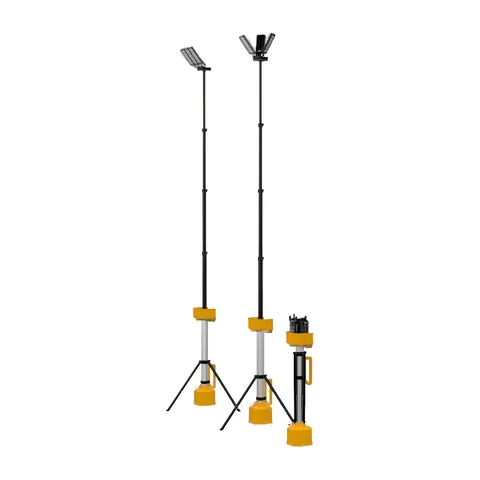
- Scene lighting should be set up upwind and outside the potential gas cloud; battery tripod systems such as the HZ6129 (Ex eb ib mb IIC T6 Gb) avoid generators and cables near the incident.
- Gas detection comes first. Lighting certification reduces ignition risk; it does not make entering an unknown atmosphere safe.
Fire services covering BESS sites will find our firefighter flashlight guide useful.
Portable lighting for daily maintenance
| Task | Light | Model example |
|---|---|---|
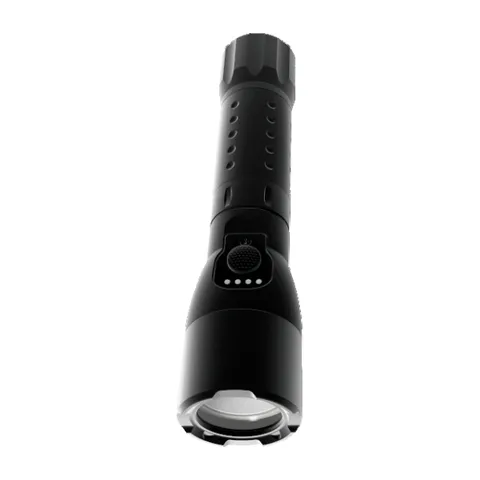
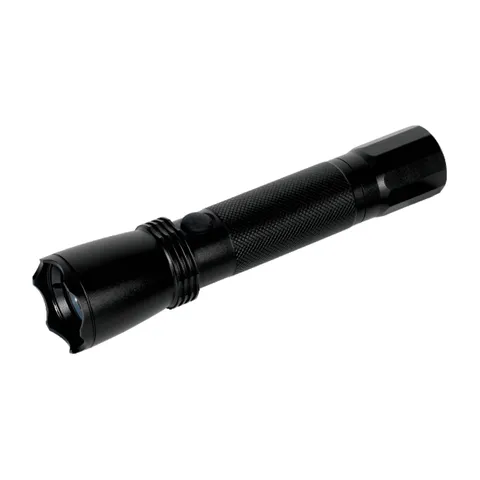
| Rounds and inspection in electrolyzer and compressor halls | IIC flashlight, 16 h work mode | HZ7623, Ex ib IIC T4 Gb |
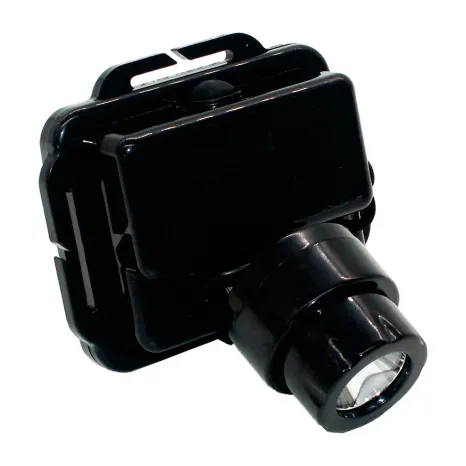
| Hands-free work on stacks, valves and cabinets | IIC headlamp | HZ5130, HZ5135 |
| Areas with low-ignition substances | T6 flashlight | HZ7625, Ex d ib IIC T6 Gb |
| Maintenance work fronts and shutdowns | IIC mast work light | HZ6103, Ex db eb ib mb IIC T6 Gb |
| Inspection inside cabinets and under skids | Torch-and-tube light | HZ6601, Ex db ib IIC T4 Gb |
| Marking equipment and exclusion zones | IIC position light | HZ4800, Ex ib IIC T4 Gb |
For choosing between work light types and planning runtime, see the explosion-proof work light guide.
Charging lithium lights on a battery site
It is easy to overlook that the portable lights themselves contain lithium batteries. On sites that manage battery risk carefully, apply the same discipline to the lights:
- Charge only in a designated area outside every hazardous zone, on a non-combustible surface.
- Use the charger and battery named on the certificate.
- Take damaged, swollen or water-logged lights out of service.
- Prefer central charging, such as the HZ1110 charging case, over individual chargers spread around the site.
Certification for new-energy projects
New-energy projects are often international: an electrolyzer built in one country, installed in another and operated by an EPC contractor from a third. Specifications commonly require IECEx or ATEX, or UL in North America. Our Ex-marked lights are certified IIC in China, and UL, ATEX and IECEx certified versions are available; tell us the project's requirement and we confirm the certificate for each model. See which certificate each market requires.
Checklist for EPC contractors and operators
- Get the hazardous area classification drawing for every building and skid.
- Specify IIC for all portable lights used in or near hydrogen areas, T4 or better (T6 where required).
- Include IIC lights in BESS emergency response kits.
- Plan a charging area outside all zones.
- Confirm the certification scheme required by the project specification.
- Order spare batteries and chargers with the lights.
Send your project details through the quote form and we will propose a lighting kit for each area.
Frequently asked questions
What gas group do lights for hydrogen areas need?
Gas group IIC (Group B in the North American Division system). Hydrogen needs very little energy to ignite, so lights rated only IIA or IIB are not acceptable.
What temperature class do I need for hydrogen?
Hydrogen's auto-ignition temperature is around 560 °C, but sites contain other substances, so most operators specify T4 or better. T6 lights cover every temperature class.
Is a battery energy storage container a hazardous area?
Normally not in operation, but it can become one after thermal runaway, when batteries vent flammable gases including hydrogen. Emergency kits for BESS sites should include IIC-rated portable lights.
Do lead-acid battery rooms need explosion-proof lights?
Battery rooms are ventilated to keep hydrogen below dangerous levels; where ventilation cannot achieve that, parts of the room are classified. Follow the room's area classification; IIC portable lights are a safe choice for work near batteries.
Can I charge explosion-proof lights inside a battery room?
No. Charge portable lights only in a designated area outside every hazardous zone, with the charger and battery named on the certificate.
Further reading
- US Department of Energy: Safe use of hydrogen
- NFPA 2: Hydrogen Technologies Code
- NFPA 855: Standard for the Installation of Stationary Energy Storage Systems
- IECEx: International Electrotechnical Commission System for Certification to Standards Relating to Equipment for Use in Explosive Atmospheres
Industries: Oil, Gas & Petrochemical · Fire & Emergency Rescue
Product lines: Explosion-Proof Flashlights
Need lights for a project? Send the zone, gas group and quantities and we will suggest models and a price.
Get a quote